

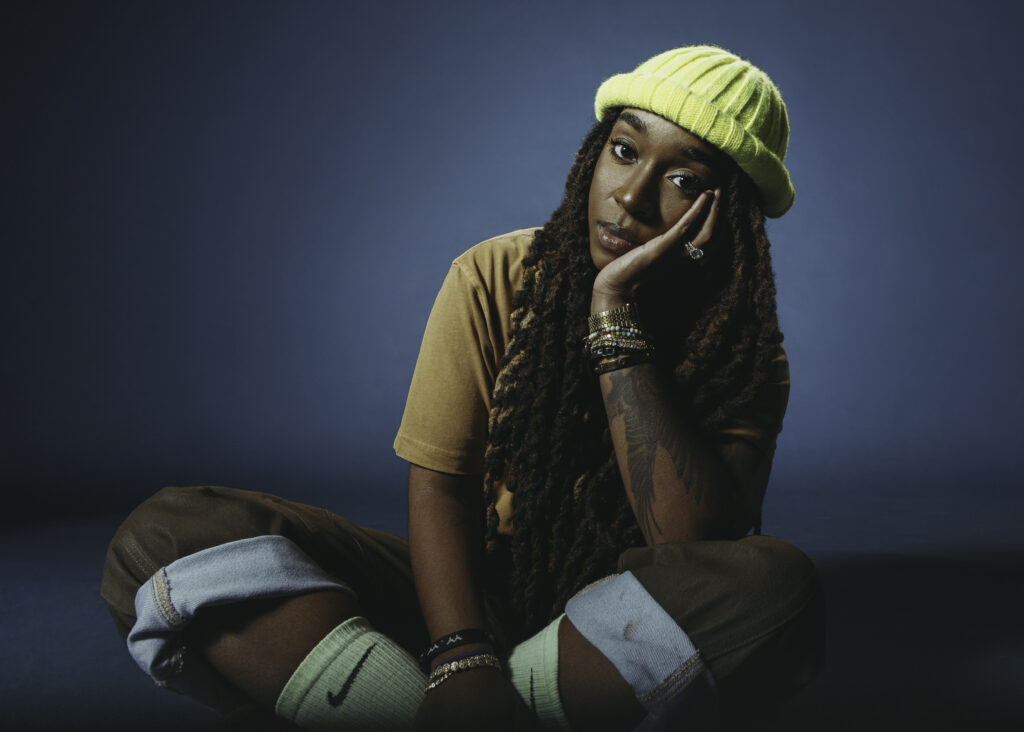





In a culture often captivated by visibility, influence, and the pursuit of recognition, Jackie Hill Perry remains anchored in something far greater than the spotlight. For the rapper, poet, bestselling author, and teacher, artistry is not simply a vehicle for self-expression, but an extension of faith, conviction, and divine purpose. Through her music, poetry, and written work, Perry explores the complexities of identity, the necessity of grace, and the transformative power of truth. With Still Blameless, she enters a new chapter shaped by lived experience, spiritual maturity, and a deeper understanding of her calling. In this intimate conversation, Perry reflects on the intentions behind her artistry, the faith that sustains her, and the identity that remains constant beyond the microphone and the expectations of an audience. At the heart of it all is a woman whose greatest desire is not simply to be heard, but to make God known.
Tiesha: Your artistry explores identity, faith, and personal growth, and Still Blameless continues that exploration through grace and self-reflection. If grace had a taste, what would it taste like to you today, and how has your understanding of grace changed as you’ve grown into the woman and artist you are now?
Jackie: If grace had a taste, I think it would taste like salt. Grace has become increasingly necessary to me as I’ve grown in my faith. When you first come to Christ, you often understand grace through the lens of being saved by it, recognizing that you don’t deserve the favor you’ve received. But at this stage in my life, I understand that I’m not only saved by grace, I’m also kept by it. It’s not simply what brought me into the kingdom; it’s what gives me the strength to continue walking through it.
Tiesha: After stepping away from music for six years, you returned to a creative world that had continued moving without you. What did that season teach you about the difference between craving a platform and being genuinely hungry to create? What feeds your artistry now that you may not have understood before?
Jackie: Honestly, I don’t think that season taught me much about the difference because I’ve never really craved a platform. That’s probably part of what made it easier for me to step away. I’ve never been particularly attached to the influence or visibility that comes with having one, and I’ve always been hesitant to pursue those things without a clear sense of God’s calling.
What feeds my artistry now is probably age and experience. I started making Christian rap when I was 24, and I’m 37 now. I’ve experienced marriage, motherhood, raising four children, and I’ve spent time studying at seminary. I’ve simply lived more life. I think that brings a level of excellence, depth, and substance to my music that I wouldn’t have had in my early twenties.
Tiesha: As a rapper, poet, and bestselling author, you have multiple ways to give language to the things happening within you. What part of your inner life is hardest to satisfy through achievement or creative expression, and how do you recognize when your soul needs something that your work cannot provide?
Jackie: I think one of the hardest things to satisfy is pain. If you listen to my music, from The Art of Joy and Crescendo to records like “Lamentations,” “Psalm 88,” “Eagle,” and “I’m Still Blameless,” there’s always some expression of struggle, frustration, or pain. Creative outlets give me a place to communicate those experiences, but they don’t necessarily take the pain away. Ultimately, I think only the Lord and community can do that. There are things that creativity can help you articulate, but healing requires something beyond the work itself.
Tiesha: Your public image is confidence through the lens of the public. In the absence of cameras and viewing audiences, what do you wrestle with when the screens are turned off? What is something you understand more deeply today because you once misunderstood it, and how did that realization change the way you see yourself?
Jackie: I wrestle with the same things I talk about publicly. I don’t really hide those parts of myself. If you listen to our podcast, With the Perrys, a lot of those conversations are an overflow of things we’re also working through privately. I wrestle with pride, anger, fear, irritation, impatience, neediness, covetousness, and envy. Romans 7 is very real to me. There’s often a tension between what I want to do and what I actually find myself doing.
One thing I’ve come to understand more deeply is God Himself. I’m growing in my knowledge of Him, and I’m increasingly able to believe something as simple as the truth that He’s for me. Knowing that God is for me has given me a stability in my own identity that I didn’t always have before.

Tiesha: You’ve built a career by maintaining your individuality and staying true to your creative vision, even as your visibility has grown. When the expectations of an audience, a culture, or an industry begin to compete with your own creative instincts, how do you discern which influences deserve a place in your evolution and which ones threaten to dilute your voice?
Jackie: For me, having a clear sense of mission and a vision that comes from that mission is what keeps everything in its proper place. I understand music as a medium through which I can fulfill Matthew 28:18–20, the Great Commission: making disciples, baptizing them in the name of the Father, Son, and Holy Spirit, and teaching them to observe all that Christ commanded.
Because my mission is clear, everything I create is anchored in that purpose, from what the music sounds like to what it looks like and how it communicates. I think it’s easy to become lost when you don’t have a vision that’s rooted in a greater mission.
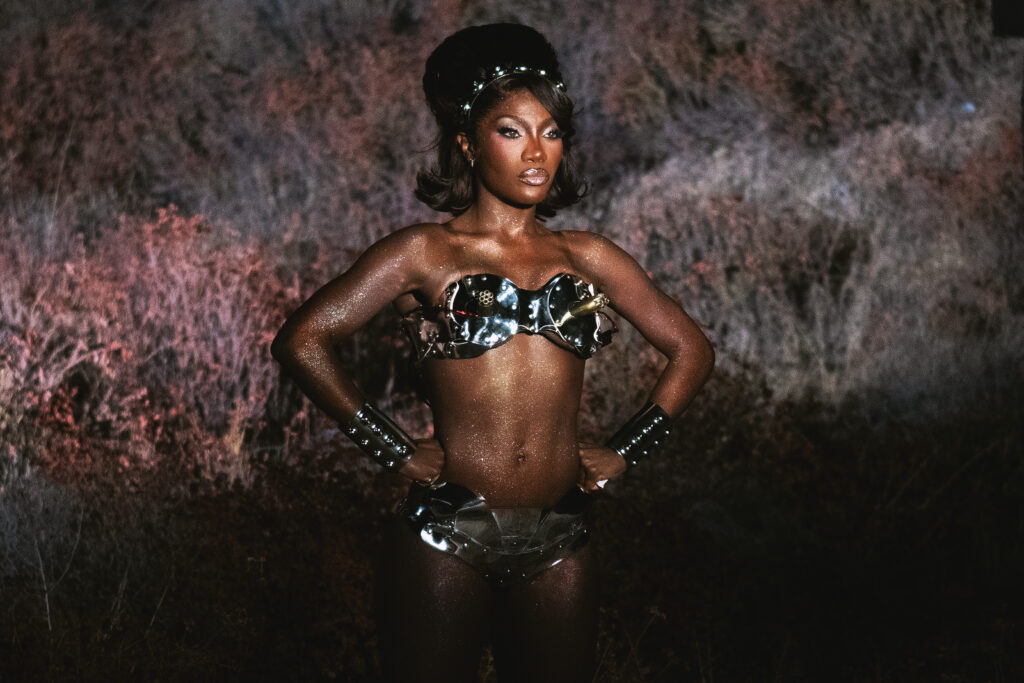
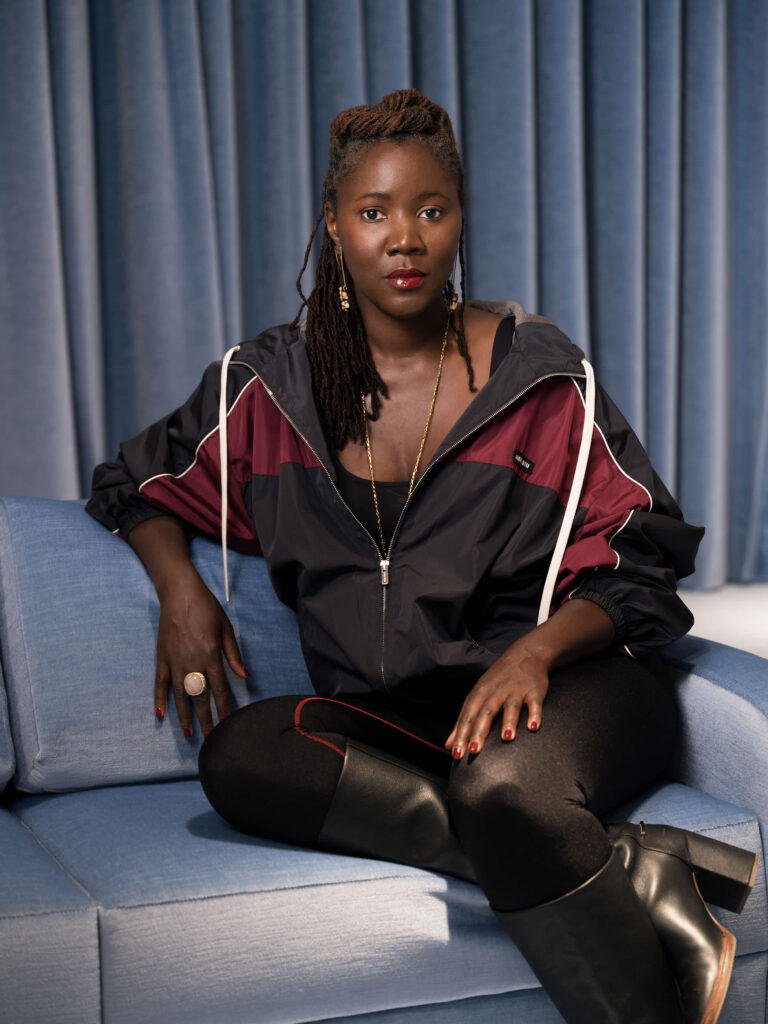
Tiesha: Your personal style is another form of self-expression, communicating something before you ever touch a microphone or put a thought on a page. What influences shape the way you present yourself visually, and how does your style reflect the parts of your identity that you want to express without having to explain them?
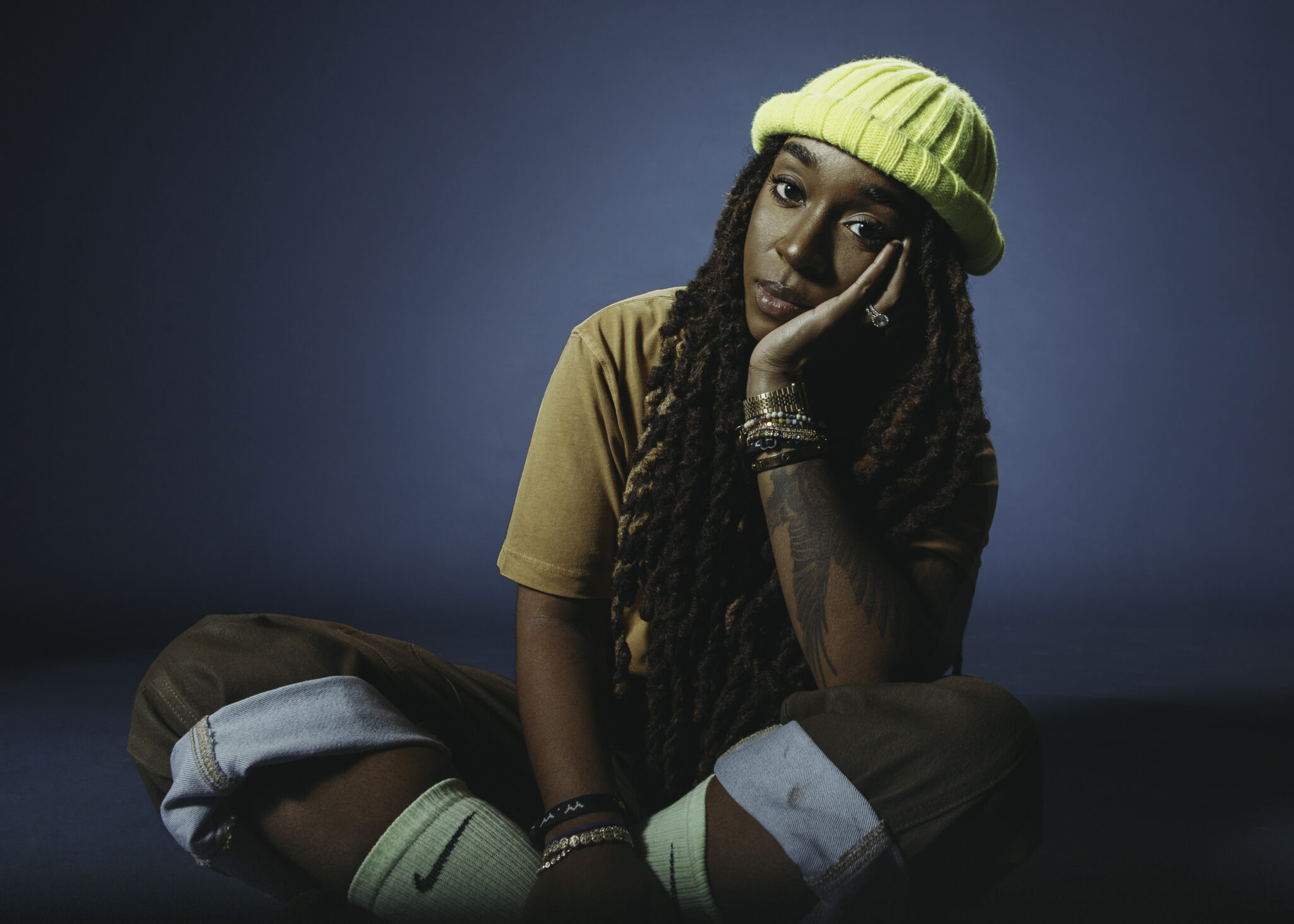
Jackie: I’m heavily influenced by streetwear and casual style because I genuinely love being comfortable. I don’t want to leave the house wearing something that I don’t actually want to wear, so comfort is important to me and reflects a lot of my personality.
Interestingly, I’m also really into interior design. There’s an interesting relationship between how I design my home and how I dress myself because I think the two go hand in hand. I gravitate toward monochromatic looks, playing with different tones of the same color, as well as unexpected patterns and pops of color mixed with neutrals. I pay attention to people whose style I admire, take different cues, and ultimately make it my own.
Tiesha: Your return to music after a six-year hiatus demonstrated that your relationship with artistry had not ended simply because you stepped away from it. What did you have to learn to hear within yourself again before you could confidently return to the microphone, and what sounds different about your voice now compared with the artist you were before the hiatus?
Jackie: Before returning to music, what I needed to hear was the Lord telling me to go back. My relationship with music has always been contingent on His direction, so I needed to know that returning was what He was calling me to do.
My voice is different now, even literally. It carries more weight. When I listen to my older albums, I feel like I sound like a child. Now, I sound like a grown woman. There’s also a different weight of authority in my voice, not one that comes from pride, but from brokenness and experience. When you’ve walked through difficult seasons, through blood, sweat, tears, and valleys, you speak about the goodness of God from a different place. You’ve experienced those realities, and you’ve had to live through them to believe them in a deeper way.
Tiesha: Your recent freestyle appearances, including your performance on Sway in the Morning and the On The Radar freestyle, have highlighted your technical ability and lyrical command. Beyond proving what you can do as a lyricist, what do you want your pen to reveal about the parts of you that cannot be measured by bars, wordplay, or a memorable performance?
Jackie: I want people to know Scripture so they can know God. If you take away the technicalities, metaphors, double entendres, similes, and all the other elements of lyricism, what you’re really getting at the core of my music is the Bible. I think that says a lot about my intention as an artist.
Tiesha: You move between music, poetry, teaching, and authorship, each requiring a different relationship with language. When you are working through something deeply personal, how do you know whether it belongs in a song, a poem, a book, or a conversation that never becomes public?
Jackie: It depends on the season I’m in. I don’t create simply because I feel the need to create. I create from a sense of mission and calling. If I’m going through something but I haven’t been called to write a book or make music about it, then it doesn’t need to become part of those things. It can simply remain in prayer or be something I work through in community. I think discernment comes from understanding the season of life you’re in and the particular calling you have during that time.
Tiesha: Our earliest environments often leave an invisible imprint on the way we understand love, identity, belonging, and possibility. When you reflect on the woman you were before your life took its current shape, what part of your former environment still influences you today, and what have you consciously chosen not to carry into this chapter?
Jackie: My upbringing taught me a lot, particularly authenticity. Growing up in St. Louis, I think there’s a certain quiet confidence that comes from the people and the environment there. Everybody is moving, making things happen, and figuring life out. People may not have the most resources or necessarily be the smartest person in the room, but there’s an undeniable sense of confidence and authenticity. I think that’s become a part of who I am.
As far as what I’ve consciously chosen not to carry forward, I’m continually working to lay down anything that doesn’t look like the cross. If it doesn’t look like Jesus, then part of my work on this side of eternity is to put it down.
Tiesha: As an artist whose work engages faith and culture, you create from a perspective that is both deeply personal and widely interpreted. What people, places, books, musical traditions, or lived experiences have most profoundly shaped your creative sensibility, and which influence do you think audiences would least expect to find in your work?
Jackie: Books have been a major influence on me. I’ve been shaped by writers and thinkers like Tim Keller, Toni Morrison, C.S. Lewis, and John Piper. Musically, I’m influenced by a wide range of artists, from Nina Simone and Eminem to the Clark Sisters. I’m drawn to anything creative that I find beautiful and good. I don’t necessarily think there’s one influence that people would be surprised to find in my work. I read widely, listen intently, and I think those influences naturally find their way into what I create.
Tiesha: You have spoken to audiences through music, poetry, and the written word, but public expression is not the same as private intimacy. Who or what allows you to experience the freedom of being understood without having to turn your experiences into something instructive, inspirational, or creatively useful?
Jackie: I think it’s the few close friendships I have. Those relationships give me a space to simply be myself without feeling like my experiences have to become something else. They don’t have to turn into a lesson, a conversation, or something creative. Sometimes it’s just about being understood and having the freedom to exist as I am.
Tiesha: Your upcoming expanded edition, Still Blameless, builds on the world of Blameless with seven new records. As you revisit and extend a body of work, what parts of yourself are you willing to expose that you might once have protected, and how do you distinguish between vulnerability that serves the art and vulnerability that you need to keep for yourself?
Jackie: I think the distinction comes down to timing, discernment, and the intention behind what I’m sharing. There are certain things that can be shared transparently but are still premature to communicate. One of the questions I consider is whether the information is actually helpful. Would sharing it create a stumbling block, become a hindrance, or create space for commentary that ultimately doesn’t serve the gospel.
I’m also careful about sharing struggles that I’m not actively working to put to death. If I struggle with something like having an attitude problem, I don’t want to speak about it as though I’m comfortable remaining in that place. I want to be honest about the struggle while also communicating that I’m actively working against it. I think that’s important because it allows you to be transparent without becoming hypocritical. There’s a difference between simply exposing something and being intentional about how that honesty is expressed.
Tiesha: Being unapologetically individual can require the courage to remain faithful to your convictions while allowing yourself to evolve. How do you hold on to what you believe without becoming afraid of who you might still become, and what does personal growth look like when it asks you to reconsider something you once felt certain about?
Jackie: I think hope is a significant part of the Christian faith and the Christian life. Because Jesus rose from the dead, I’m someone who always has hope. I believe that when He promises to finish the work He started with me, He’s telling the truth. Ultimately, I trust that all things will work together.
I also don’t think uncertainty is necessarily the problem. I think unbelief is. Growth, particularly as a Christian, requires growing in faith. In the places where I struggle to believe that God is trustworthy, faithful, true, and good, those are the places where I need to grow. For me, growth isn’t about becoming someone who has no uncertainty. It’s about growing in my faith and learning to trust God more deeply.
Tiesha: When people encounter Jackie Hill Perry, they may first meet the rapper, the poet, the bestselling author, or the voice of faith and culture. But imagine a day when the music has stopped, the books are closed, and there is no audience waiting for you to say something meaningful. Who is Jackie in that silence, and what do you hope people eventually understand about your soul that your artistry alone could never fully communicate?
Jackie: I think there are moments of that experience in my life every day, and there have also been entire seasons where I’ve experienced it. Eventually, I imagine it will become an even fuller reality. But at the end of the day, who Jackie is in that silence is a daughter. She’s the same person she is when she steps away from the audience and everything else. I think that identity just becomes clearer when there are no distractions.
I’m simply a daughter of the Lord. And ultimately, that’s what I want my music to communicate. I want people to experience Him through the different ways He’s made Himself available to us in Christ.
Interview by Tiesha Vassar