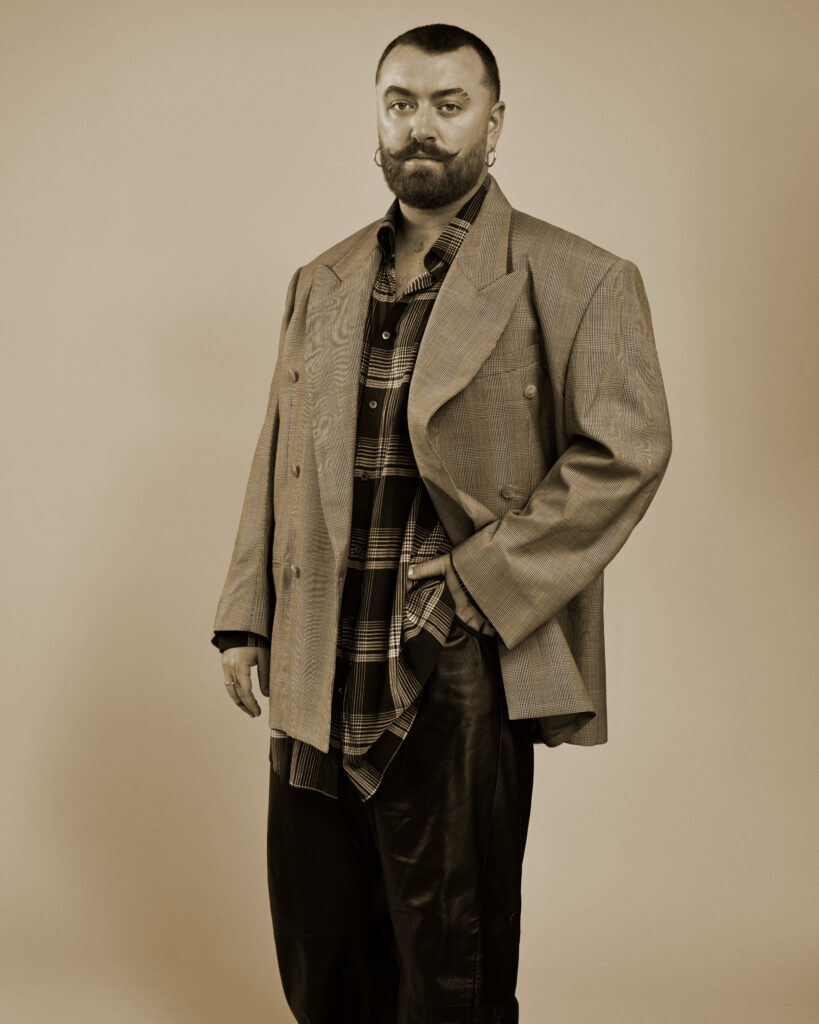










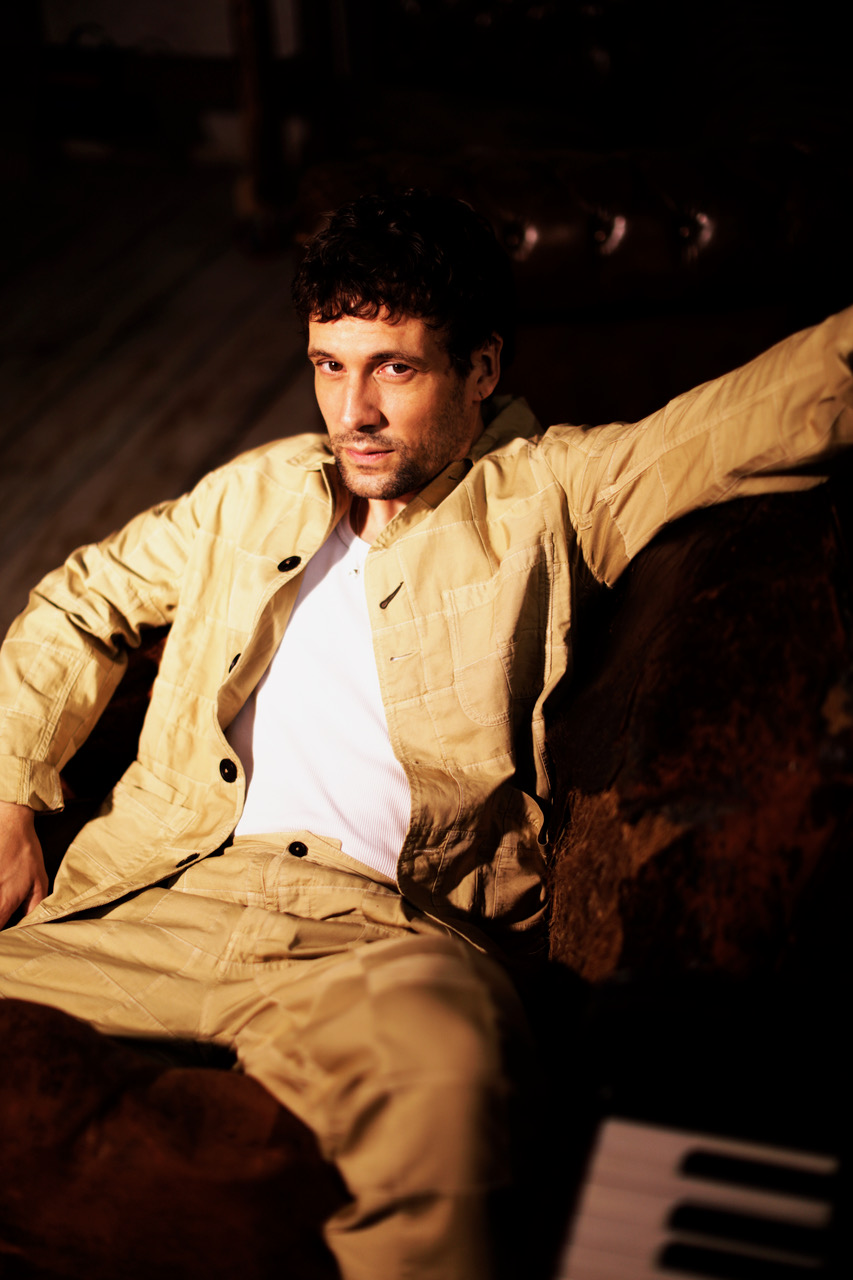
From Marvel’s Agents of S.H.I.E.L.D. to The Day of the Jackal, Euphoria, Slow Horses, and now the gripping new crime thriller Hit Point, Nick Blood has built one of the most versatile careers on screen. Equally at home in comedy, Shakespeare, and high-stakes drama, the British actor continues to seek out roles that challenge expectations. As Hit Point premieres, we caught up with Blood to talk about stepping into complex characters, balancing stage and screen, finding creative longevity, and why he’ll always choose trainers over dress shoes.
Hit Point places you at the center of a tense crime thriller. What was it about this script that immediately drew you in?
The dialogue was the first thing. Howard writes such rich and distinct characters and gives them dialogue that feels so natural. I felt like these two characters at the center of the story (Leo and Bella) were just mates shooting the breeze. Whilst solving crime. That and the twisty nature of the plot. Those big surprises kept me hooked.
Your recent projects have ranged from comedy and Shakespeare to crime thrillers and prestige television. Are you intentionally seeking variety, or has your career naturally evolved that way?
A bit of both. I never wanted to be type cast. I don’t want to get bored doing the job I love so I always seek out variety. If it’s a challenge then I’ll run toward it. I feel very lucky to get to do such a variety or work. Flipping from comedy to drama, stage to screen, is what keeps me interested.
Looking at where you are now, what feels different about this chapter of your career compared to five or ten years ago?
I’m far more at ease with things. Maybe that’s growing up, maybe it’s experience, but I don’t care so much about what anyone thinks and live in the moment a little bit more. You learn that you never know what’s round the corner. What will be will be.
After working across stage, television, and streaming, what continues to challenge you most as an actor?
Every new role is a challenge. A new script has endless possibilities and interpretations. And you’re constantly changing your environment and colleagues.
Is there a role that quietly changed the way you approach every project that followed?
It’s less about the role and more about the experience. Sometimes that’s people you work with giving sage advice —an on-set chat with David Hayman has stayed with me for a long time, his wisdom was invaluable. Sometimes it’s the reflection afterwards. I did a job a few years ago that caused me a lot of stress and anxiety. That taught me a lot too. I needed to take care of myself a little bit better and that meant a healthier approach to the work. I learned to take time off and not be so 24/7 about the job in hand. Life is for living. It’s a just a play.
Without giving too much away, who is your character at the beginning of Hit Point, and how much do they change by the end?
Leo is a plain clothes detective trying to do his best. He’s a decent man caught up in a complicated situation. He’s down to earth, funny and loyal. He has a strong sense of personal responsibility—which is his downfall. At the end of the season he’s ground down by his experiences. But his feelings for Bella haven’t ebbed at all.
How physically demanding was the role compared to previous projects you’ve done?
As far as any action sequences go, it wasn’t especially demanding but the endurance needed to get up at 4:30am, work pretty much non stop, get home at 8pm, straight to bed only to do it all over again—that’s the tough part. You need stamina for that. And a great team around you—the makeup and costume crew keeping you looking good, a director who you trust, crew to keep a smile on your face in between takes, and cast mates who you can depend on. I had the lot on this job.
Was there a particular scene that took you completely outside your comfort zone?
Yeah but not in the way you might imagine. We were filming on location near the canal one day and we obviously disturbed a local resident who insisted on shouting abuse at us non stop. I decided to have a word and intended to be diplomatic but ended up just telling him to fuck off. It didn’t exactly help the situation. In my defence he was threatening to kill people so he probably got off lightly. Although he did end up getting arrested.
You worked closely with Saffron Hocking throughout the series. What made that creative partnership work so well?
We’ve been friends for a long time and have such a laugh together. We’re like brother and sister constantly winding each other up. There’s a lot of love between us so we know we’ve got each other’s back.
West London almost feels like a character in the series. How important was the setting in shaping the story?
We wanted the show to feel like a slice of London life. Capturing the chaos of the city—people living cheek by jowl and all different types of people piled together. We shot a bunch of stuff guerilla style without locking off streets so we could get an authentic feel for the city. There’s no way you could replicate that with a crowd of supporting artists. I remember one day seeing a guy in hot pants and an anorak eating crackers from a plastic bag… You can’t buy that randomness.
You’re currently appearing in Twenty Twenty Six, which couldn’t be more different in tone. What’s it like switching between comedy and drama?
I love it. I’m doing a play right now at the Young Vic which is a very heavy drama about domestic abuse. Then I’m on the telly playing a dopey lad trying to blag his way through the World Cup. At the end of the day it’s all acting. I’m grateful I’m not pigeon holed into one thing.
Phil Plank feels like a wonderfully absurd character. Did you know exactly how you wanted to play him from the start?
Yep. Johns script gives you all you need. Things didn’t really change from the first read. Actually that’s a lie… there’s an element I added to his character in episode 4 which I came up with while filming. It’s never spoken about but you can’t really miss it.
Comedy often looks effortless but requires incredible precision. How do you approach comedic timing differently from dramatic performances?
Both are about timing. Why someone is thinking something at that particular time, why are they giving that look or saying that thing at that precise moment. Sometimes comedy needs constructing with precision though – a physical comedy or slapstick sequence needs an attention to detail and discipline that often goes unnoticed.
You recently played Benedick in Much Ado About Nothing with the Royal Shakespeare Company. What does returning to the stage give you that television can’t?
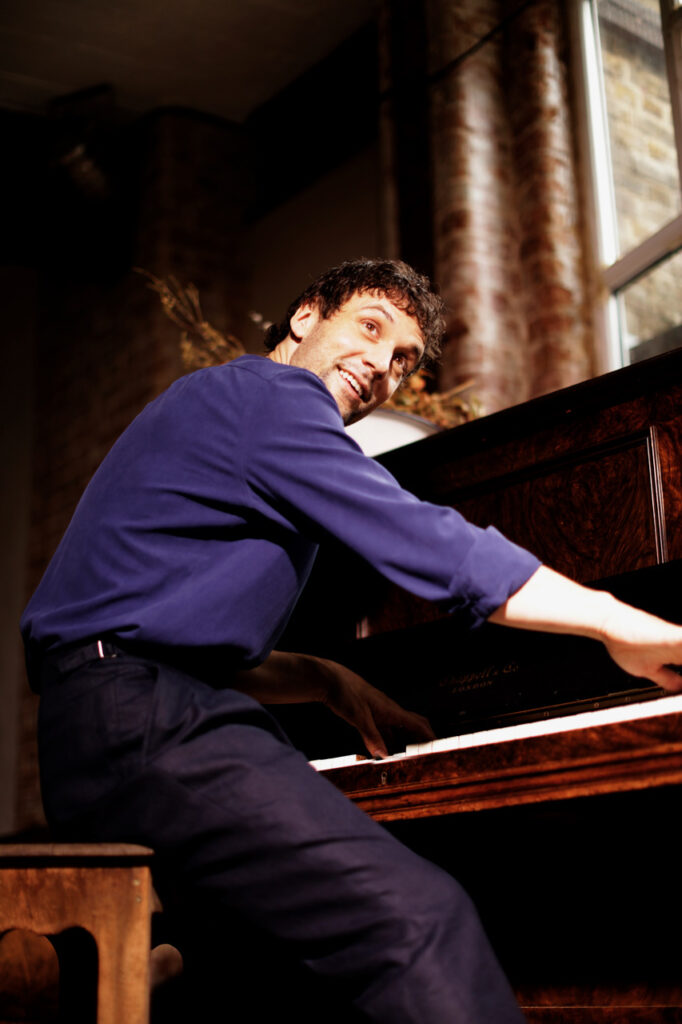
The live audience response is a like a drug. And doing a largely comedic role like Benedick who has a direct communication with the audience gives you a constant feedback loop. That relationship is like something telepathic with the audience. They’re the missing piece of the puzzle that only arrives when you open the show. The buzz is like nothing else. Every now and then you’d get a little audience participation which allowed me to have a lot of fun riffing with them back and forth. it’s like dancing along a tightrope. It’s a thrill.
Shakespeare demands a different rhythm and discipline. Does performing those texts sharpen your screen work?
I’ve no idea to be honest. It helps a lot with dissecting a text and understanding the clues the writer has given you with choice of words and punctuation. But screen scripts can change almost daily so it’s not like you can directly apply it.
Theatre offers immediate audience feedback, while television doesn’t. Which experience do you find more rewarding?
They’re like two different jobs. I love the freedom stage work gives you—you’re your own editor on stage. I like having a rehearsal period to pull a play apart and discover things that weren’t obvious to you in the first read. But doing the same show over and over every night can be draining. The immediacy of screen work can allow for something spontaneous that no one planned that gives you gold. It’s hard to pick between the two, but it was doing plays as a kid that made me fall in love with this job, so that’s the first love. However, it’s always the case that when I’m on stage for a while I’m hankering after some screen work, and vice versa.
Many fans still know you as Lance Hunter from Agents of S.H.I.E.L.D.. Does it surprise you how much that character continues to resonate?
Yeah. That whole show means so much to its fans. And being an ensemble show it’s always surprising that fans might have picked out your character for a special place in their heart. There’ve been tattoos – even name changes—that fans have shown me. Bonkers. I’ve met some lovely people along the way.
If you could revisit one previous character knowing what you know now as an actor, who would it be?
Probably all of them. So many times I’ve been having a shower or something and thought ‘oh that’s how I should’ve played that line’. I definitely think I would have been bolder earlier in my career if I’d have had the experience I do now.
Working on shows like Misfits, Euphoria, Slow Horses, and The Day of the Jackal has placed you alongside some incredible ensembles. What have those collaborations taught you?
The biggest lesson which I don’t think anyone can appreciate till they’ve been on a working set is how vital very crew member is. If you’ve ever done a super low budget project where you inevitably have less personel you really learn how crucial the crew are. The eyes are on the actors but there’s a hundred people behind the camera making it all work. As far as actors go, I’ve picked up loads of stuff from some of the brilliant people I’ve worked with. And then the odd lesson in what not to do from the (thankfully very rare) dickhead on set.
How much of a character do you discover before filming begins, and how much happens once you’re actually on set?
Hopefully you get the time to converse with the director and creative team beforehand so you can make sure you’re on the same path. But things really can change as you go. The hard part is shooting out of sequence and making sure you know where you are in the story. On Hit Point we implemented a check in before each scene so we could remind everyone of where we are in the story
What’s something about your acting process that people would probably find surprising?
That it changes. Sometimes there’s a whole load of prep, other times you’re just winging it. I’m not sure the audience would ever be able to tell the difference though.
How do you decompress after playing emotionally or physically demanding roles?
I’ve learned the hard way that I need to wind down after a long shoot or run of a play. I’m not very good at relaxing but I now know I need to take it very easy and waste a few mornings lying in bed watching football highlights. A holiday always helps too.
How would you describe your personal style away from set?
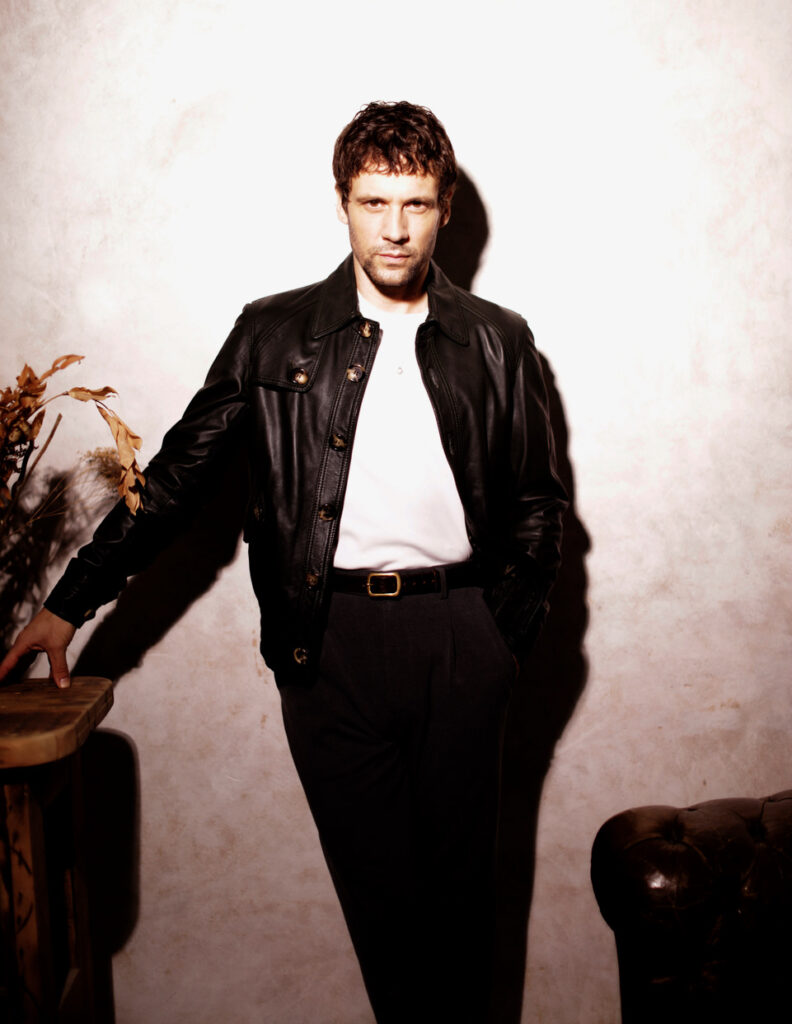
Street casual? Trainers (always trainers, never shoes), loose trousers, a white T-shirt and one of many many jackets. I have a jacket addiction. I’ve bought six in the last two weeks and have a couple more arriving in the post. A man can never have enough jackets. Or trainers. Or black trousers. Or white T-shirts.
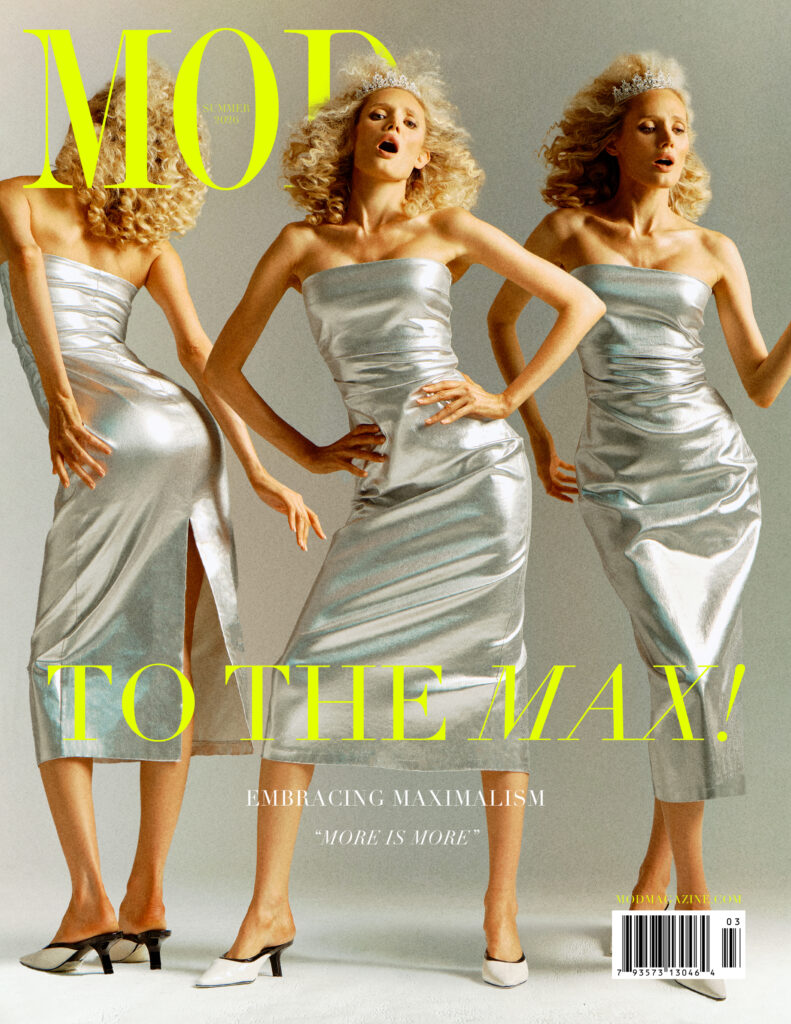
Read the full interview in MOD Magazine’s Summer 2026 Issue.