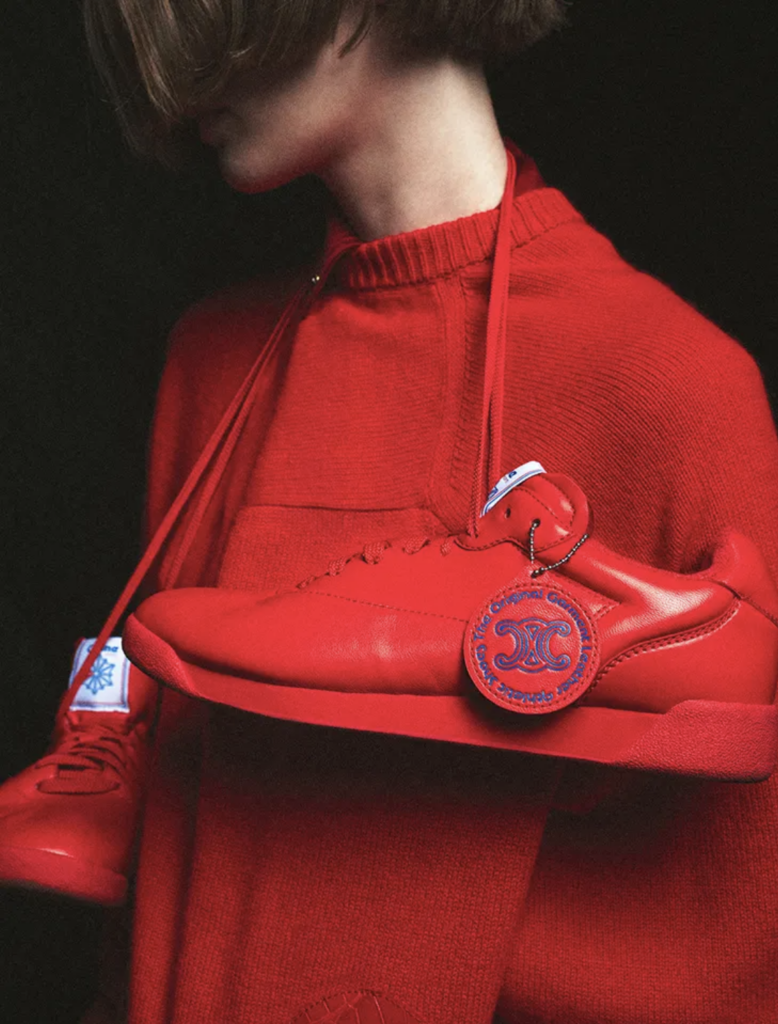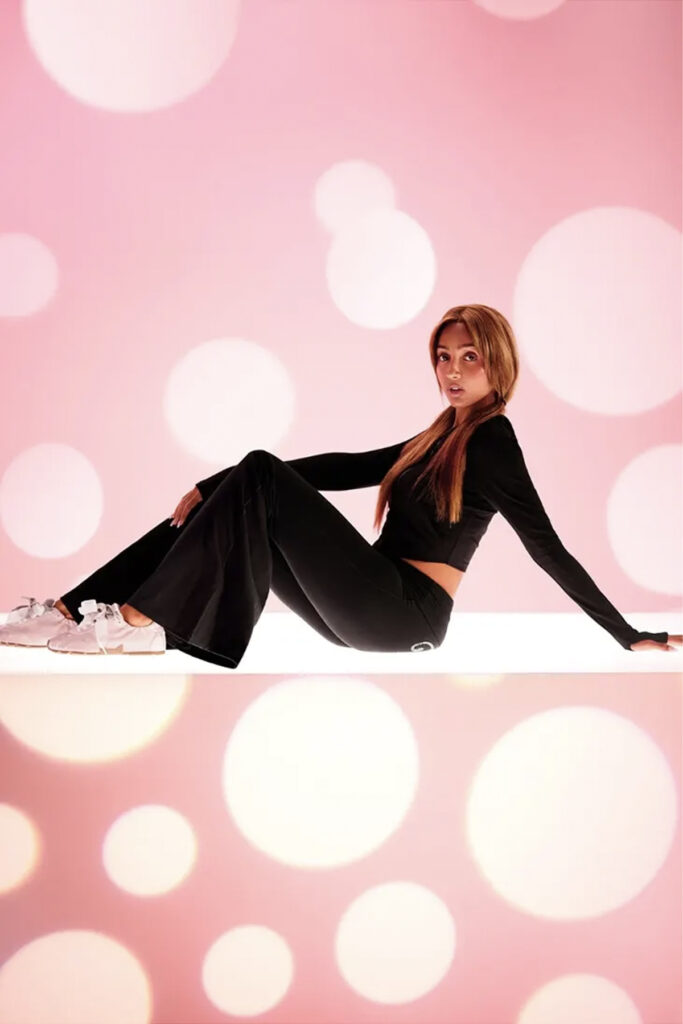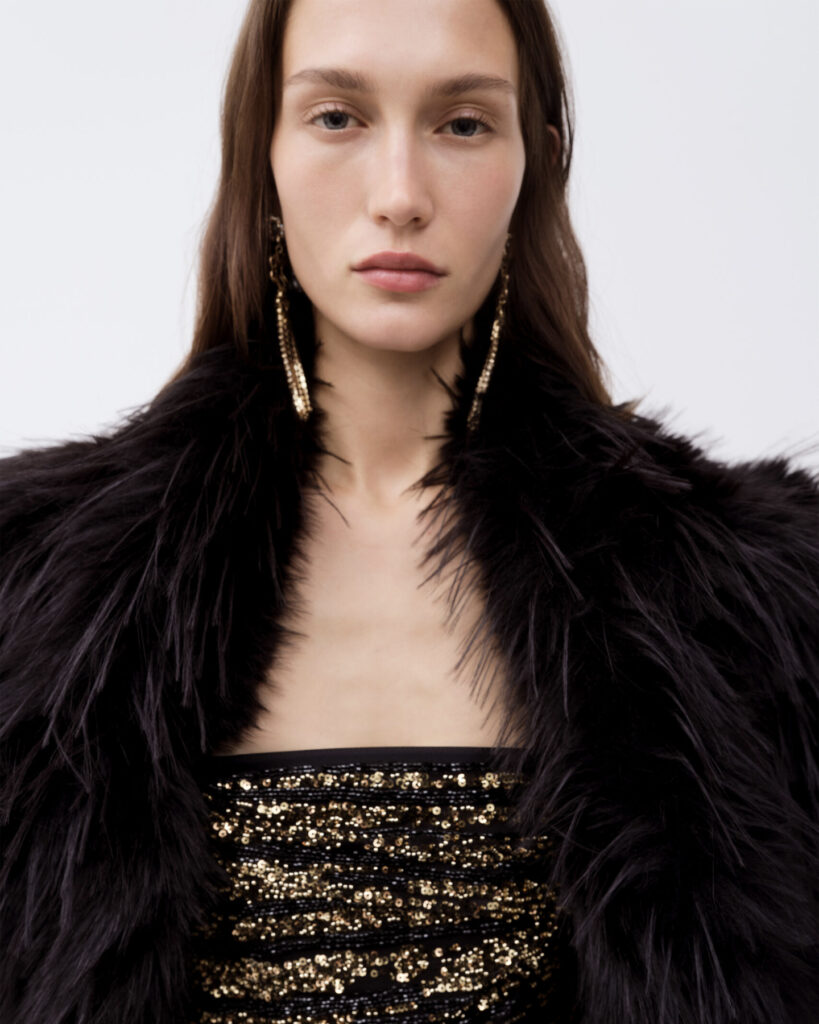




There is a particular strangeness to the moments just before sleep. The bedroom is familiar, but in the dark its objects begin to shift. Memories blur with imagination, reflections become unreliable, and another version of yourself can emerge. For Spring/Summer 2027, Yuhan Wang enters this unstable territory with Sweet Nightmare, using the dream as a way of exploring a woman’s inner world.
At its heart is the idea of the divided self, the different versions of ourselves that can exist at once. Some are shaped by expectation, obedience, and social acceptance; others are more instinctive, emotional, and harder to contain. Yuhan Wang considers what happens when these different selves begin to recognize each other, with dreams becoming a meeting place for memories, desires, emotions, and hidden parts of the self.
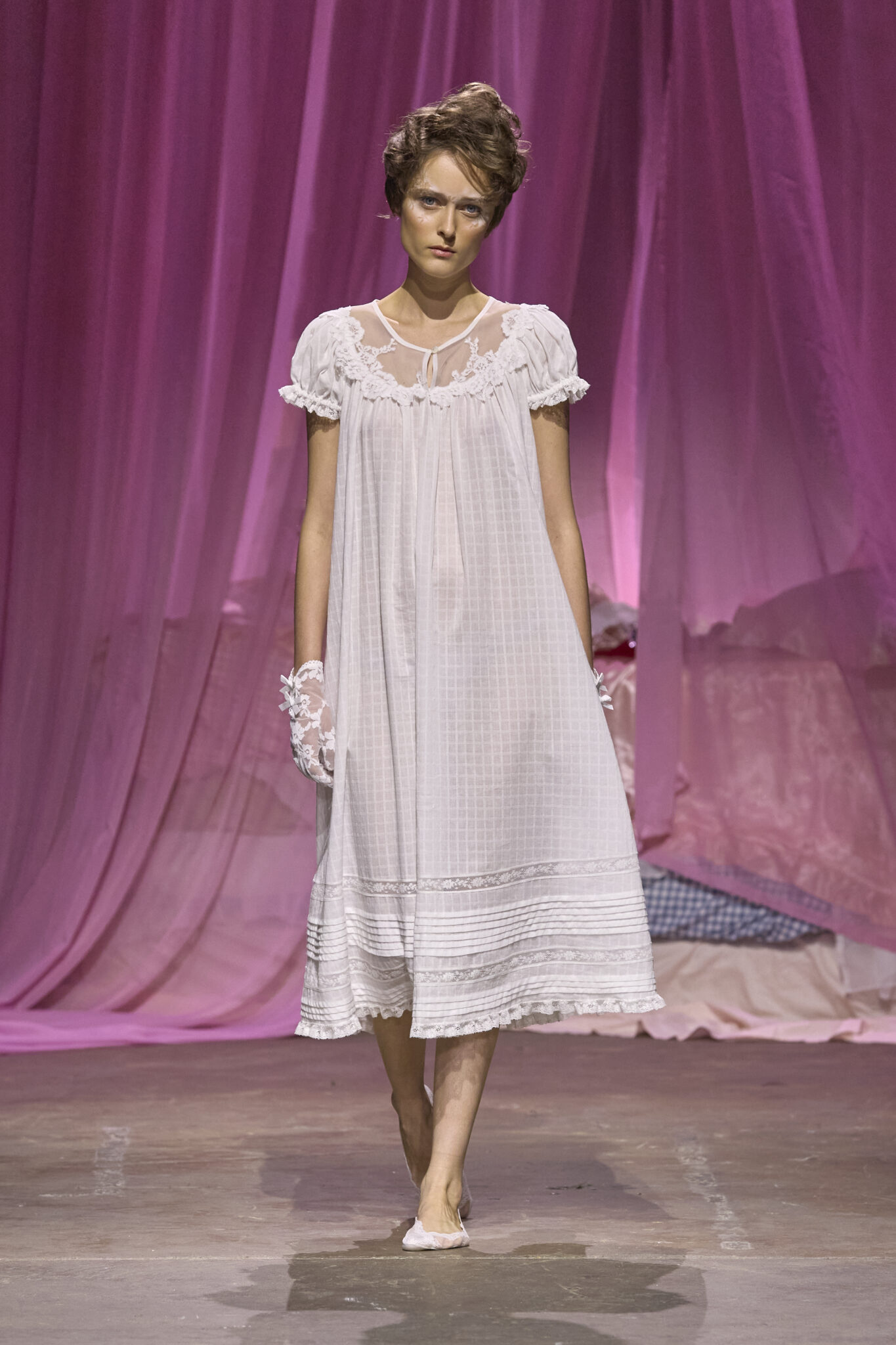
The bedroom becomes a private space in which a woman can exist beyond the expectations placed upon her and outside the way she is usually seen. It is an intimate world of nightdresses, underwear, beauty rituals, sentimental objects, and the small moments that belong only to herself. The domestic unease of Rosemary’s Baby and fractured identity of Eyes Without a Face linger in the background, where the bedroom becomes somewhere between sanctuary and psychological terrain. The heightened color and dreamlike unease of Dario Argento’s Suspiria also inform the collection, where sweetness and beauty are never entirely innocent.
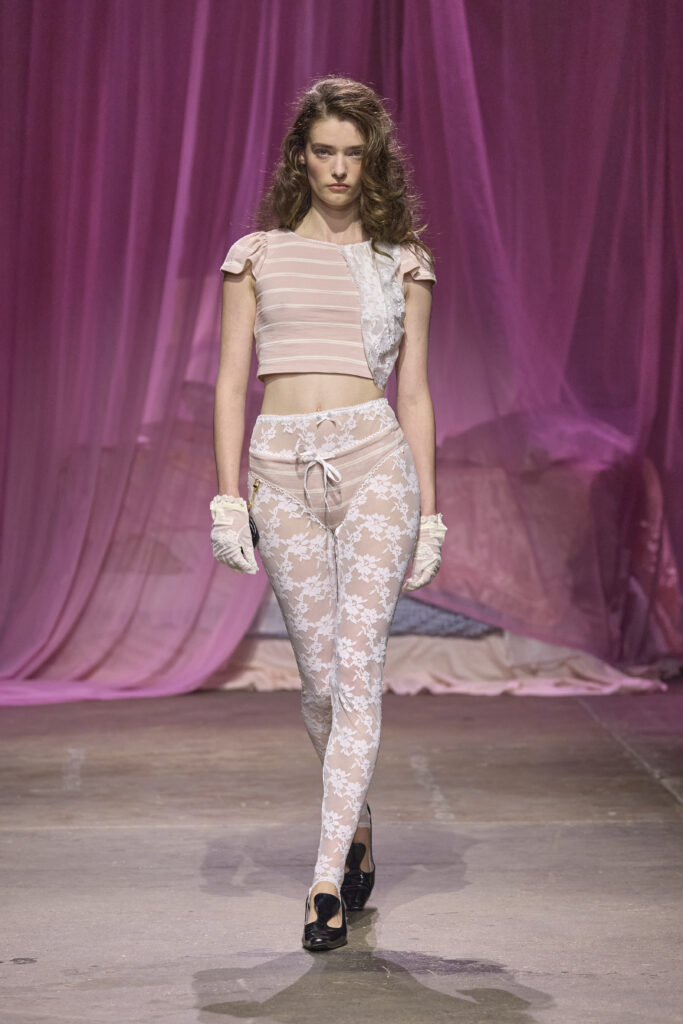
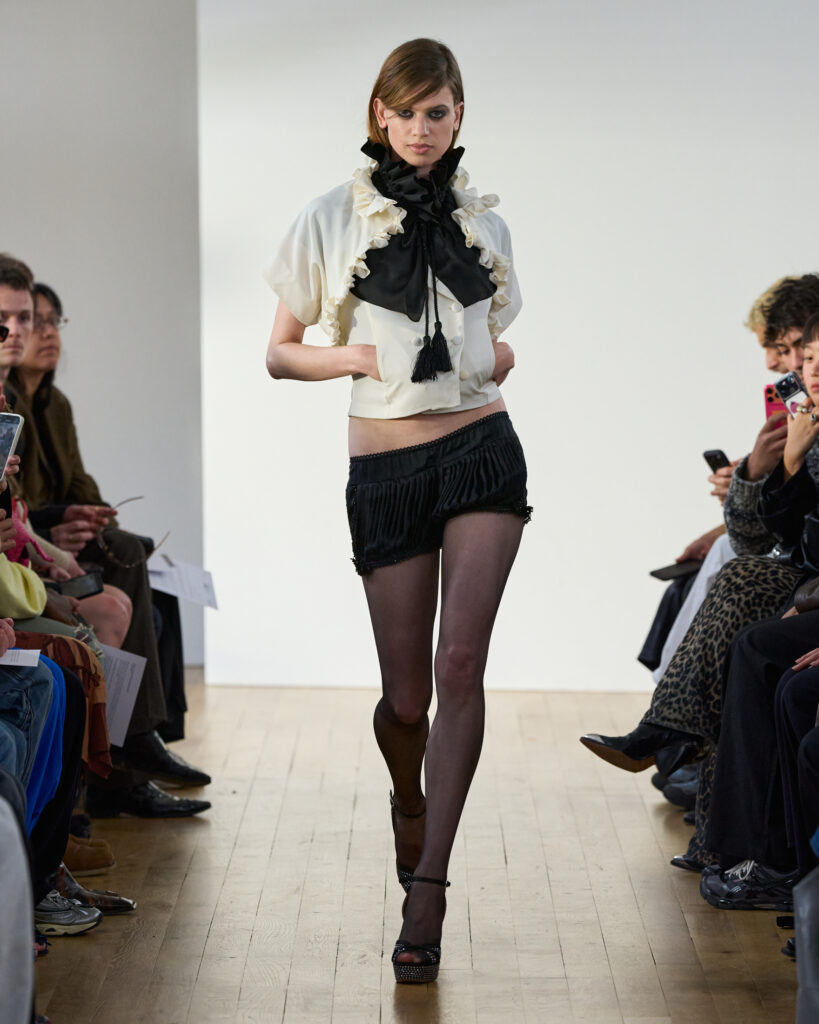
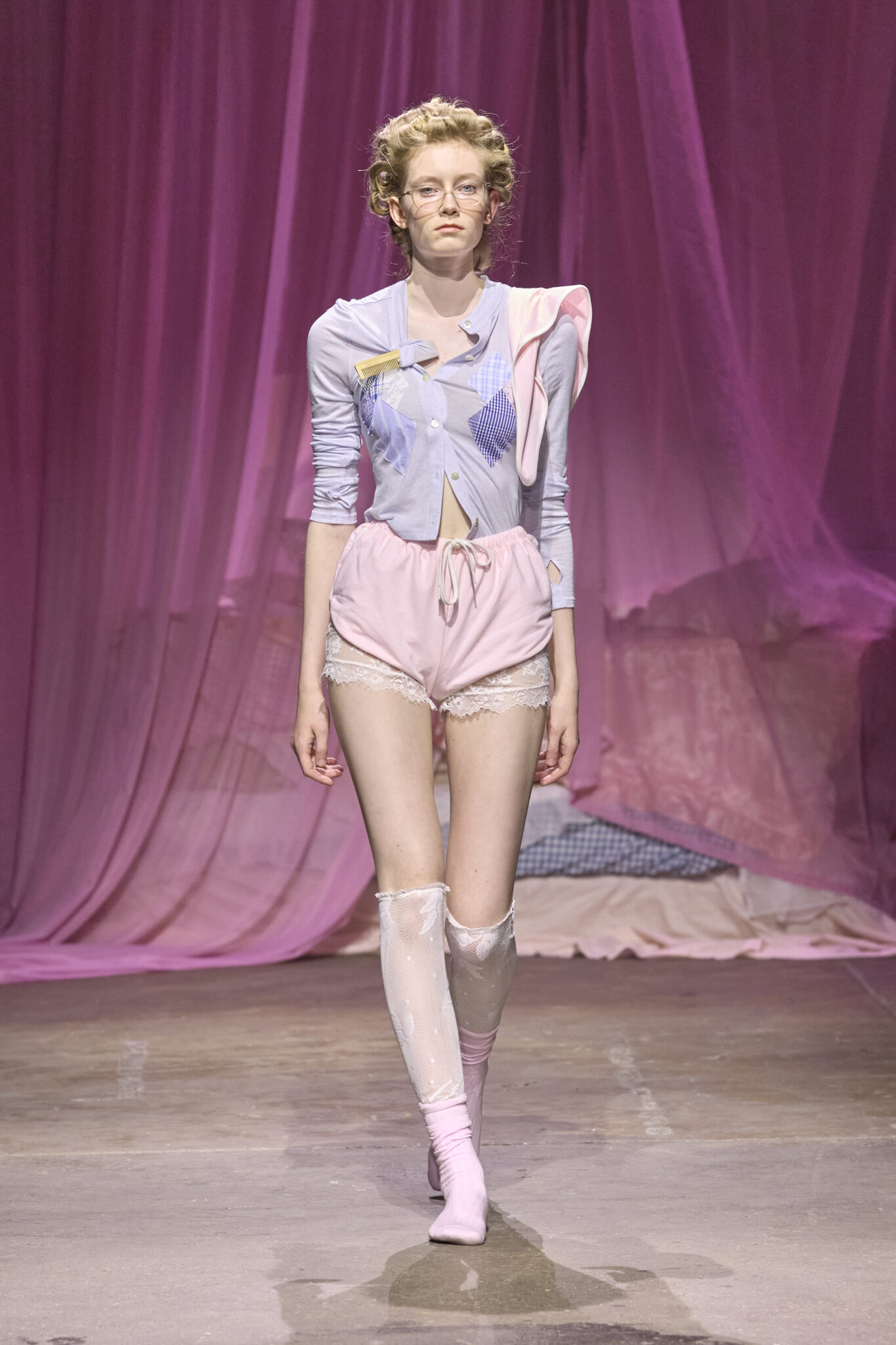
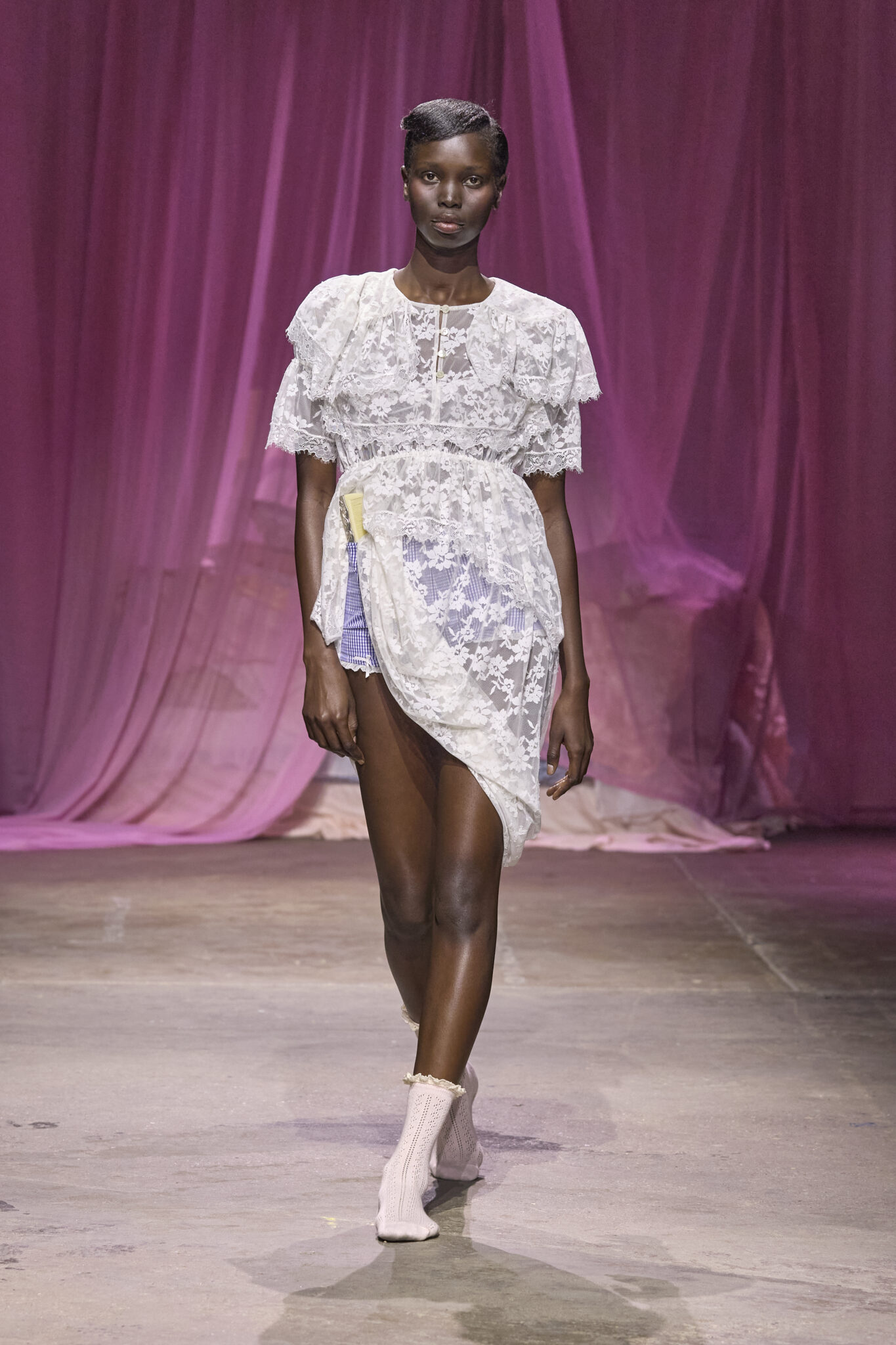
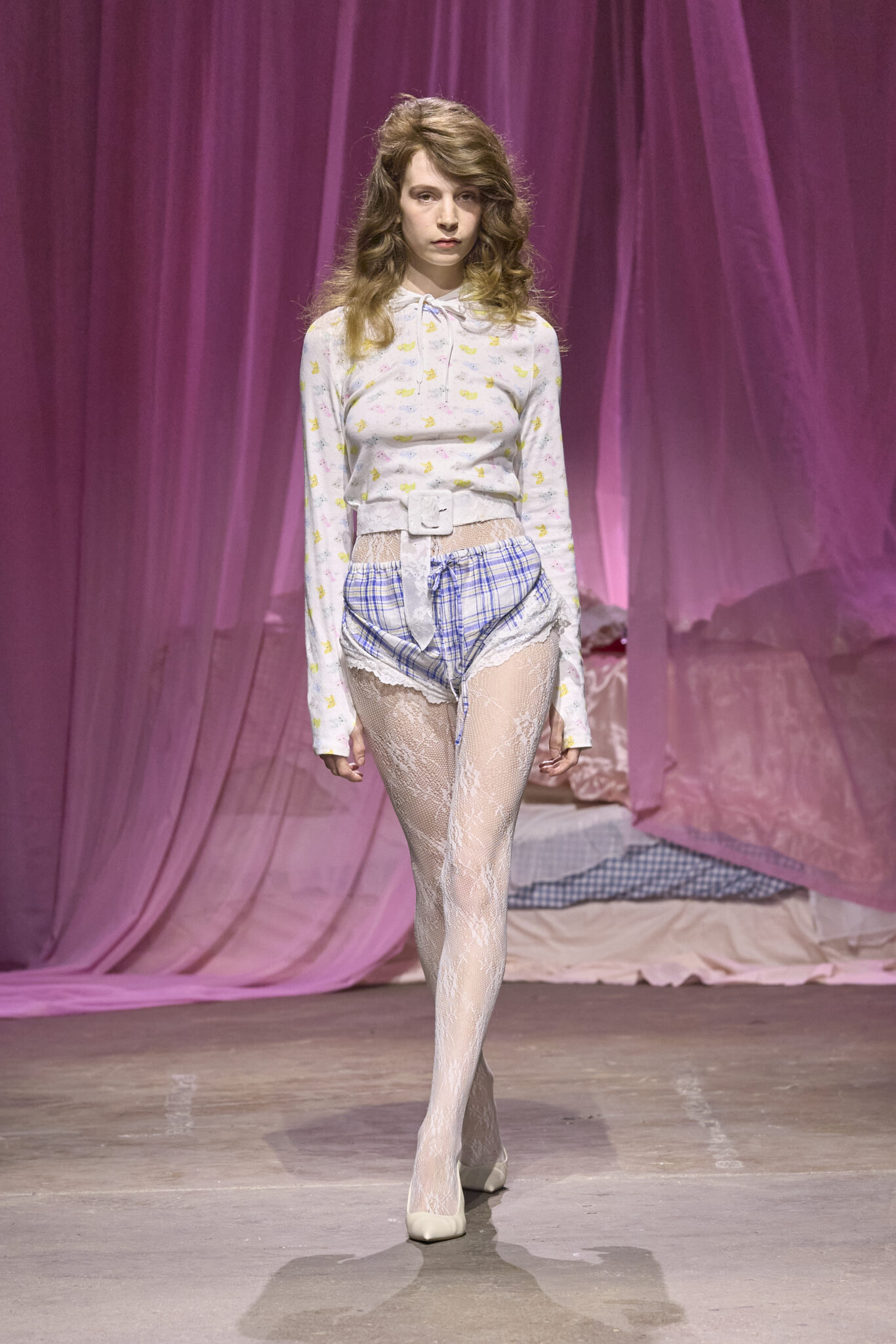
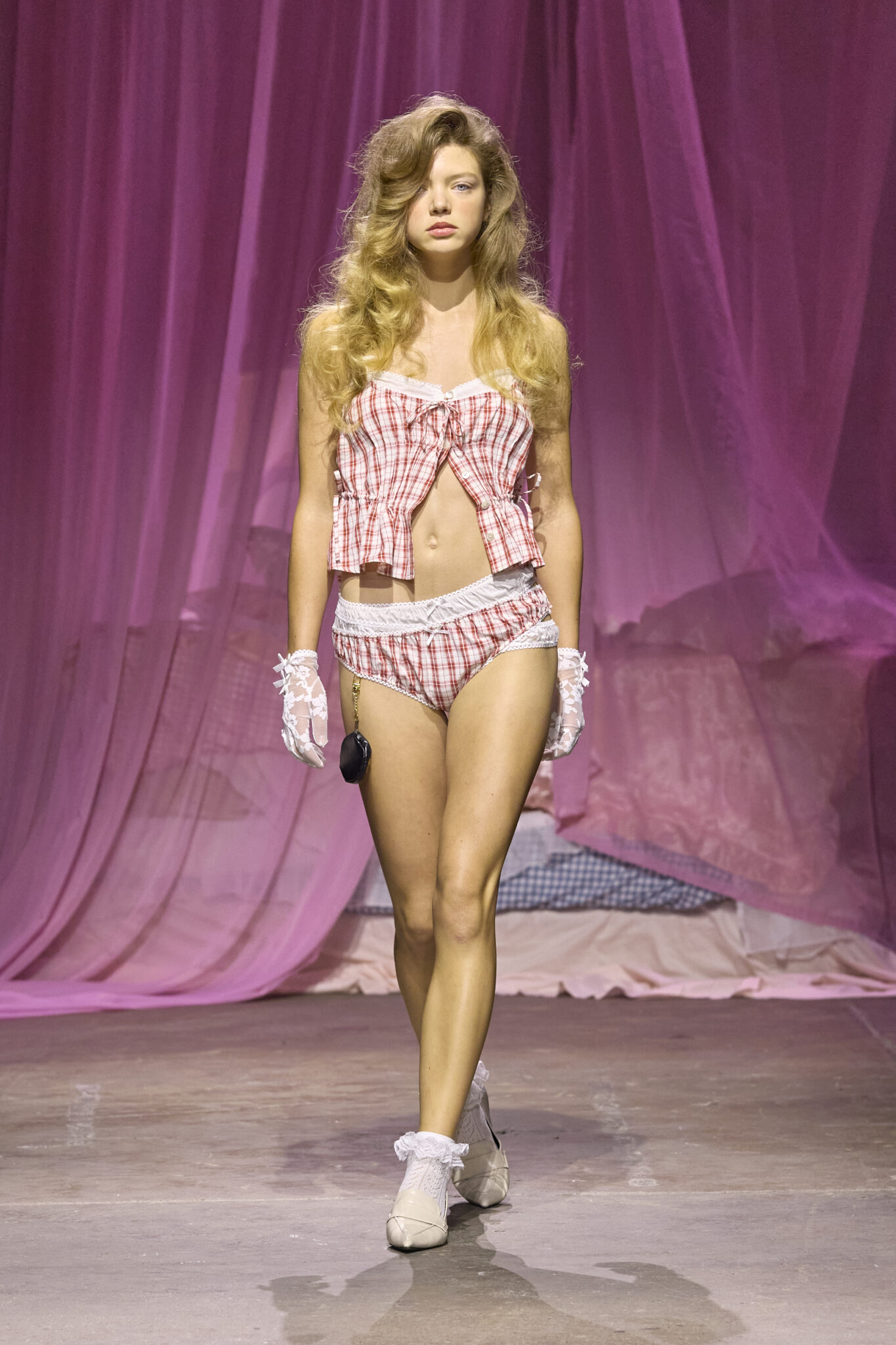
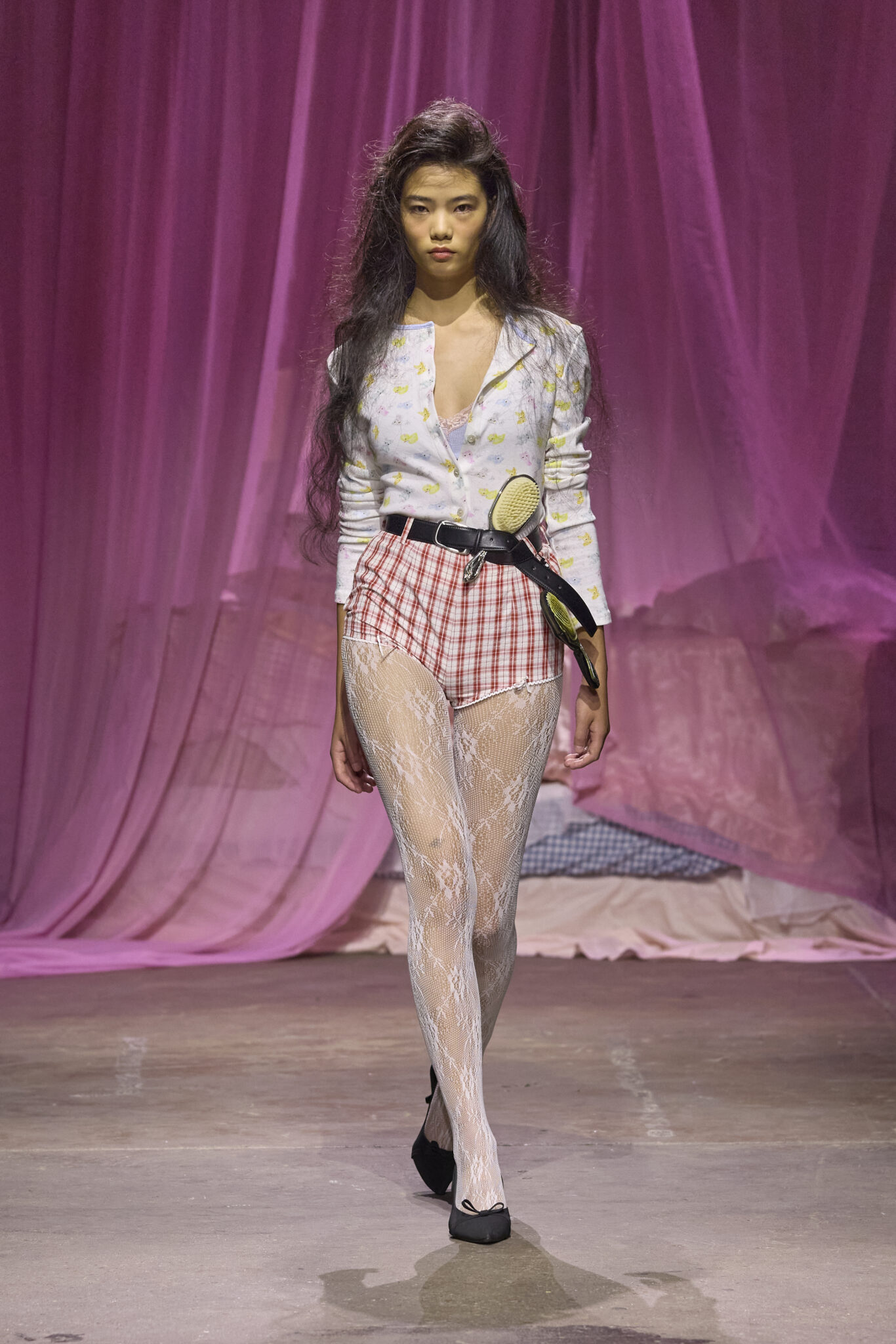
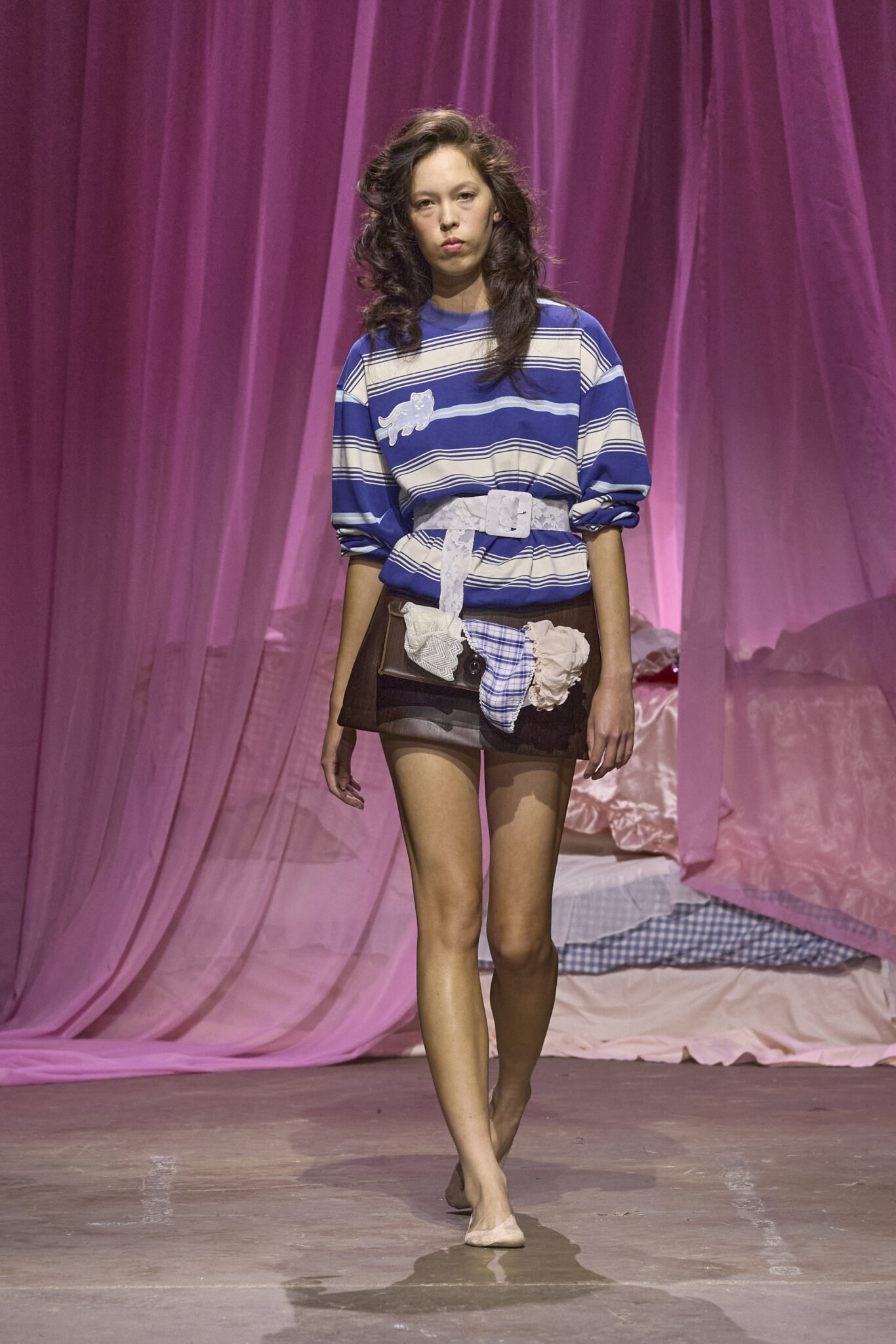
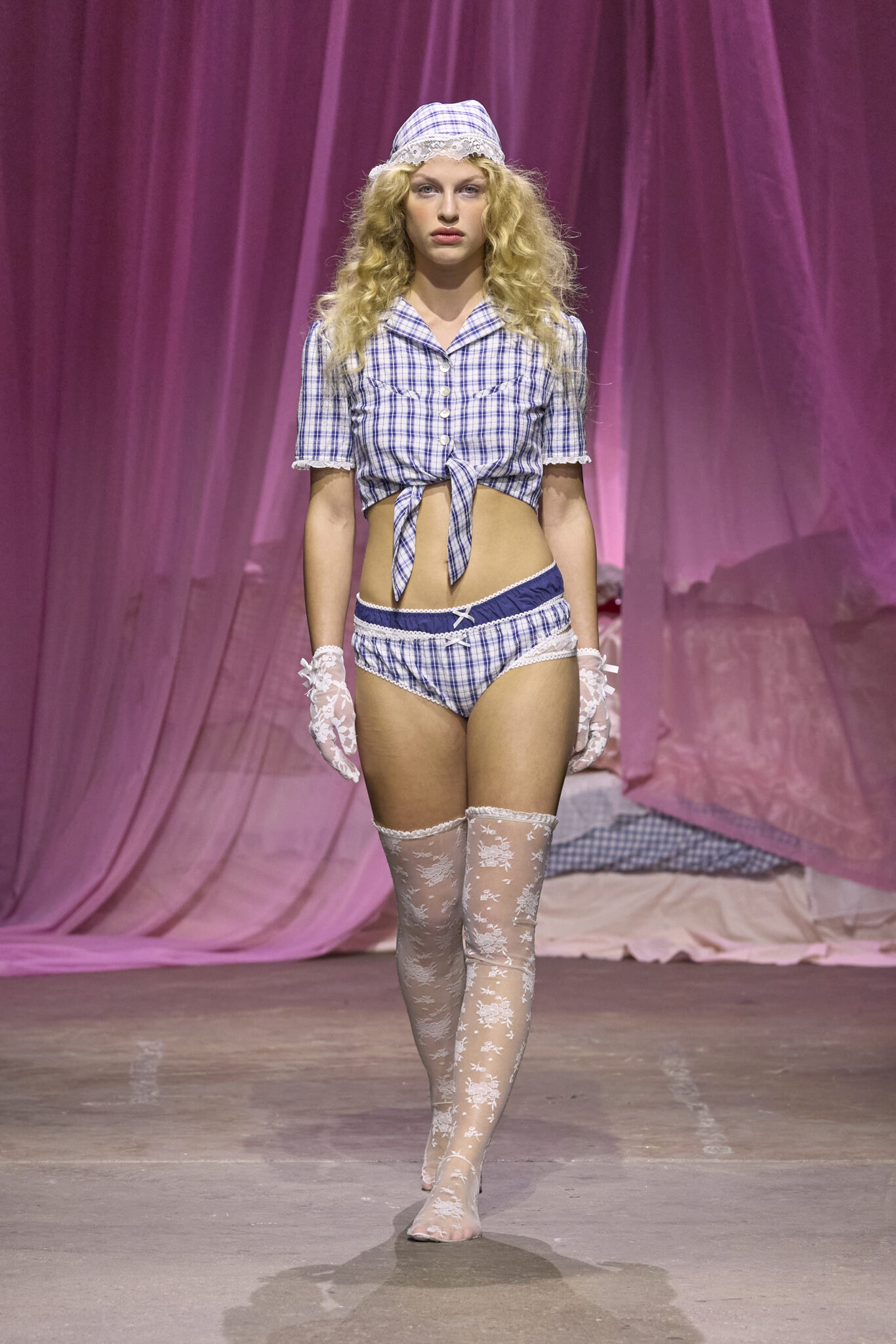
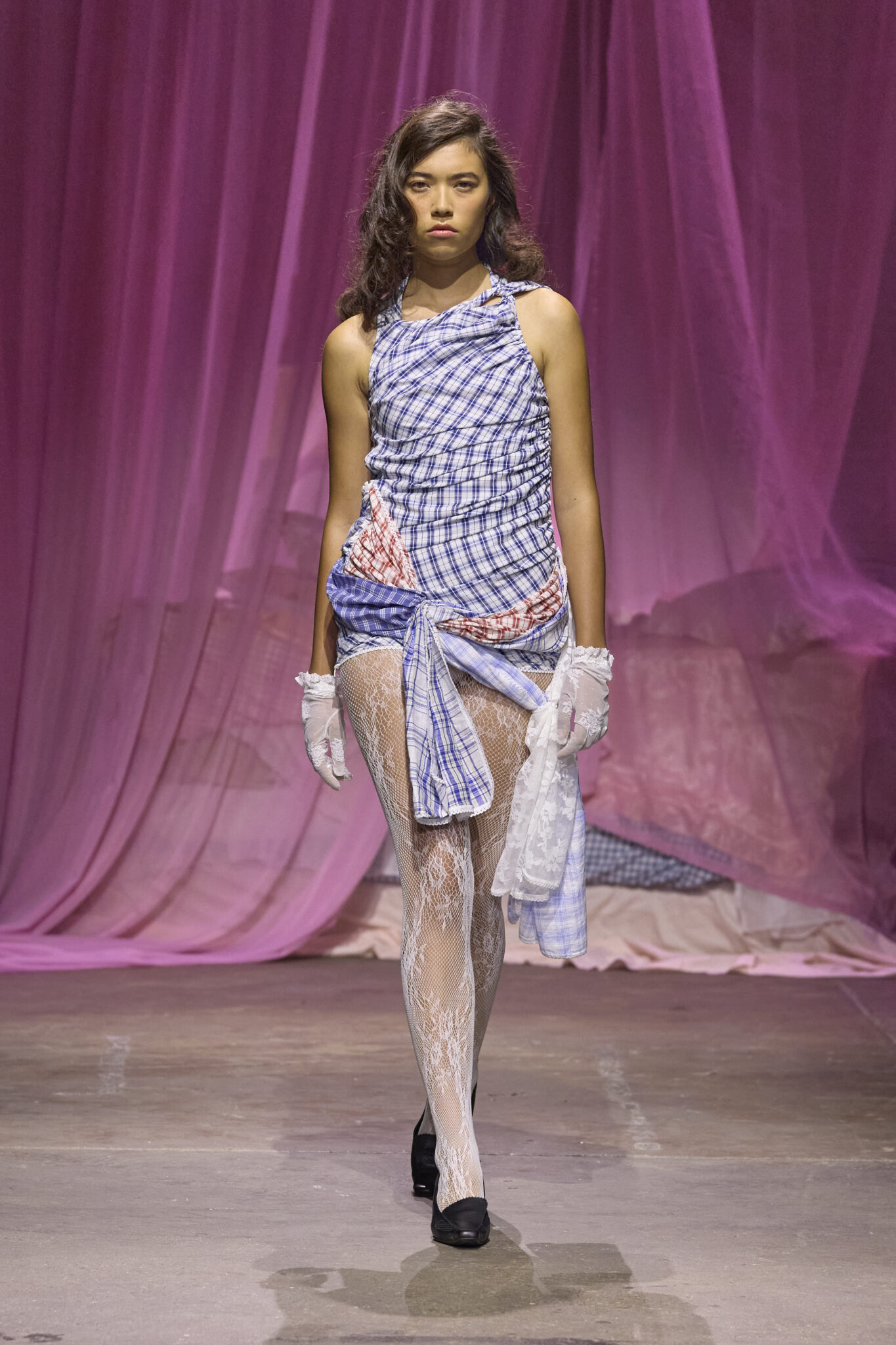
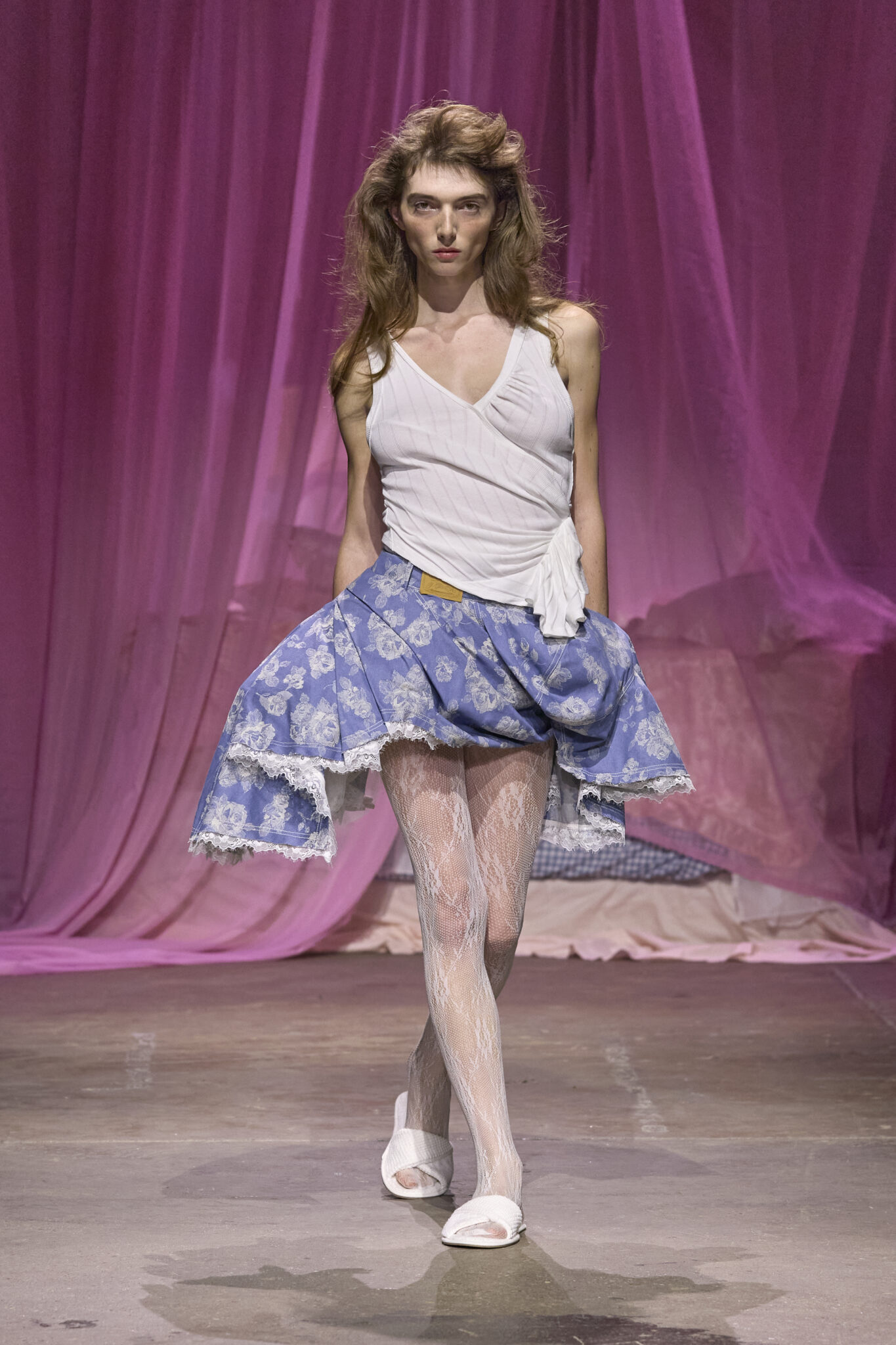
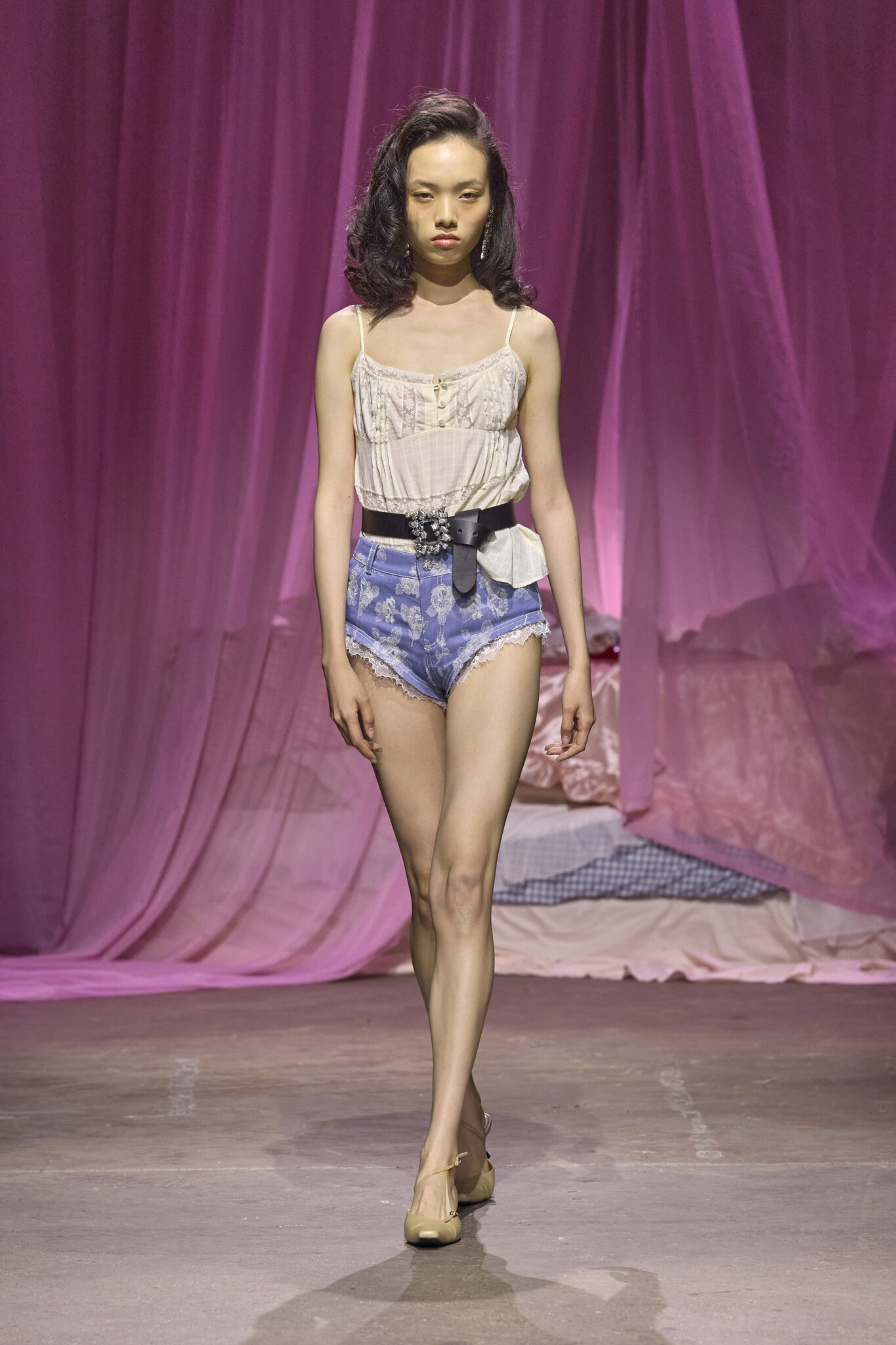
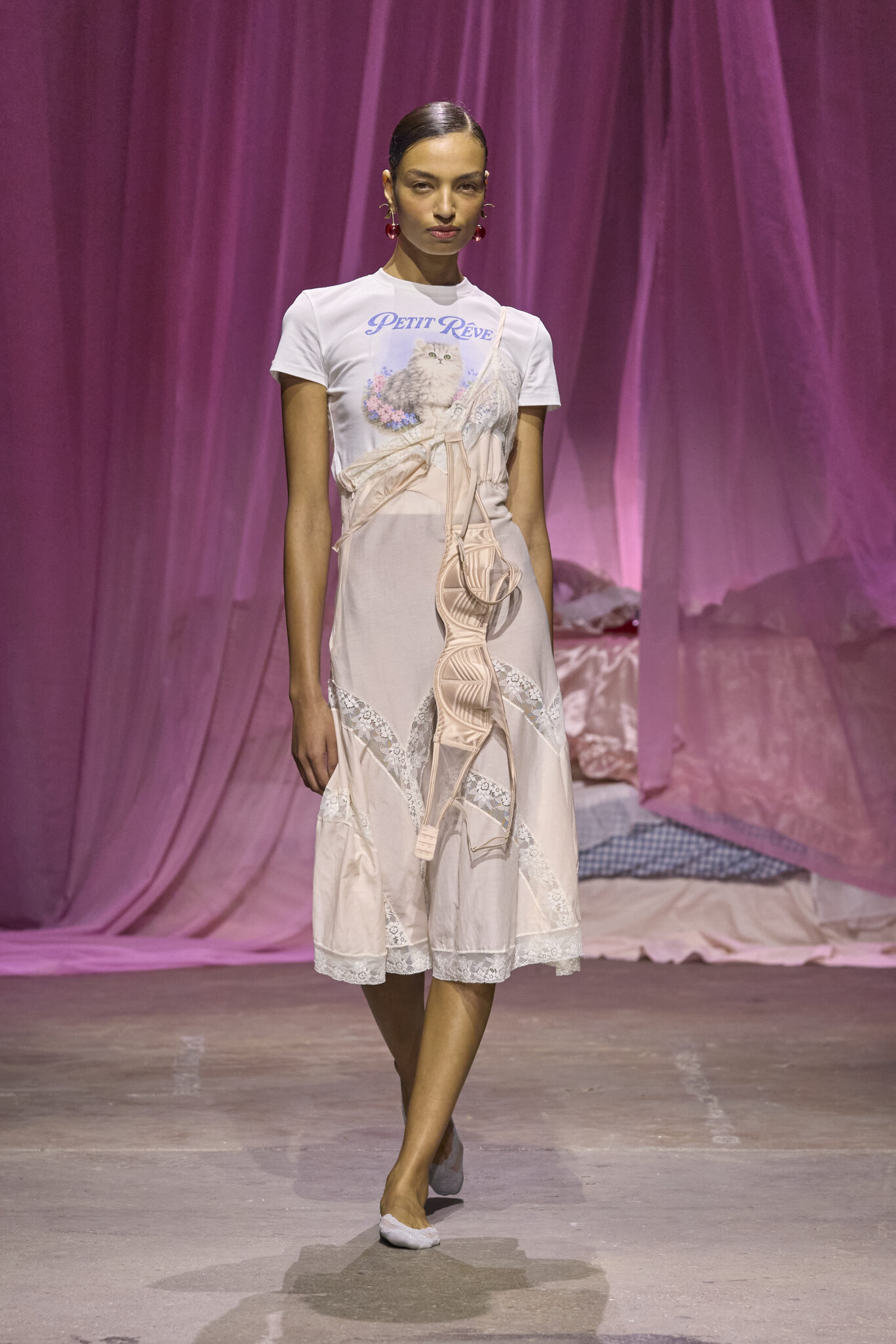
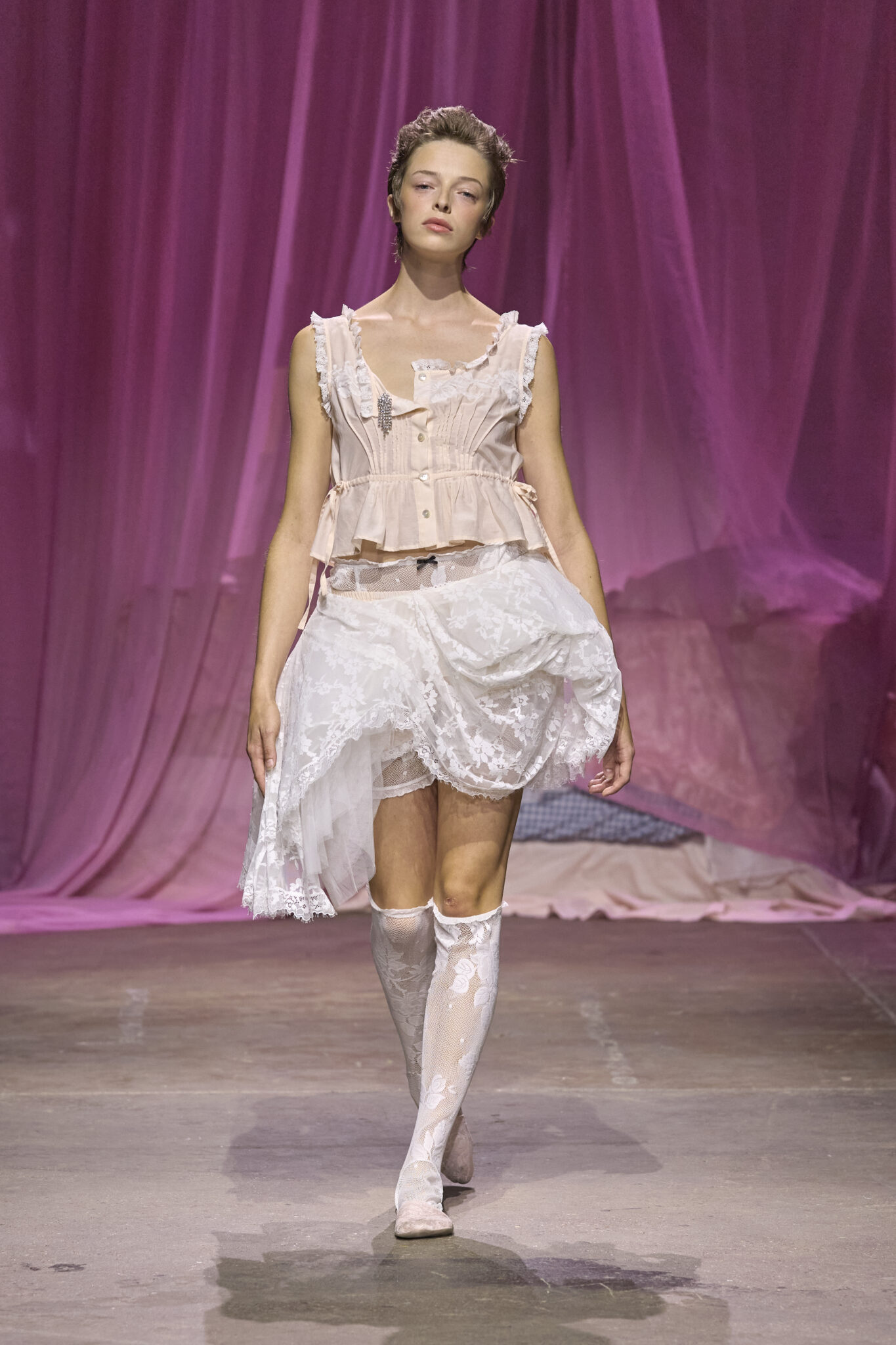
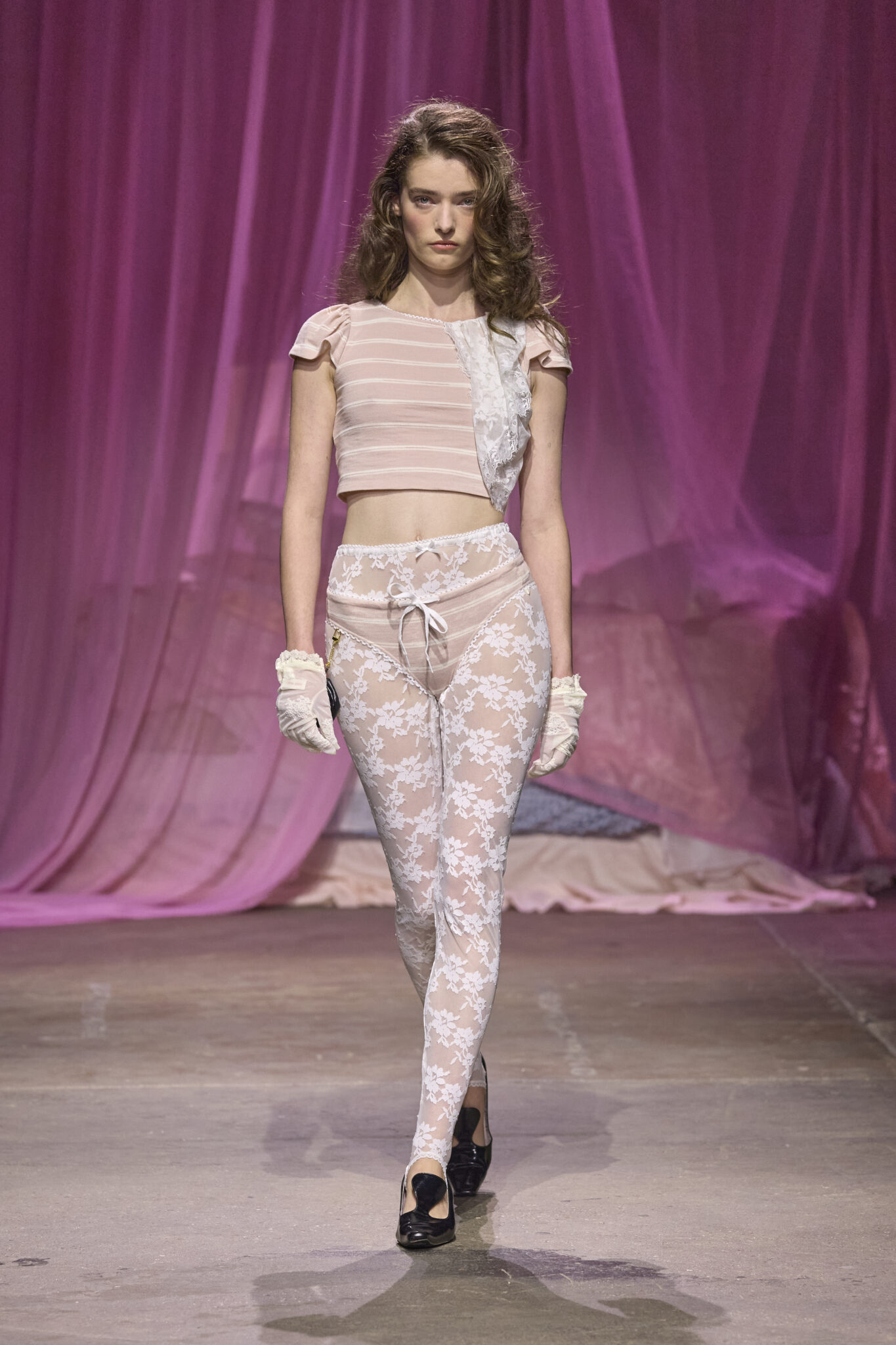
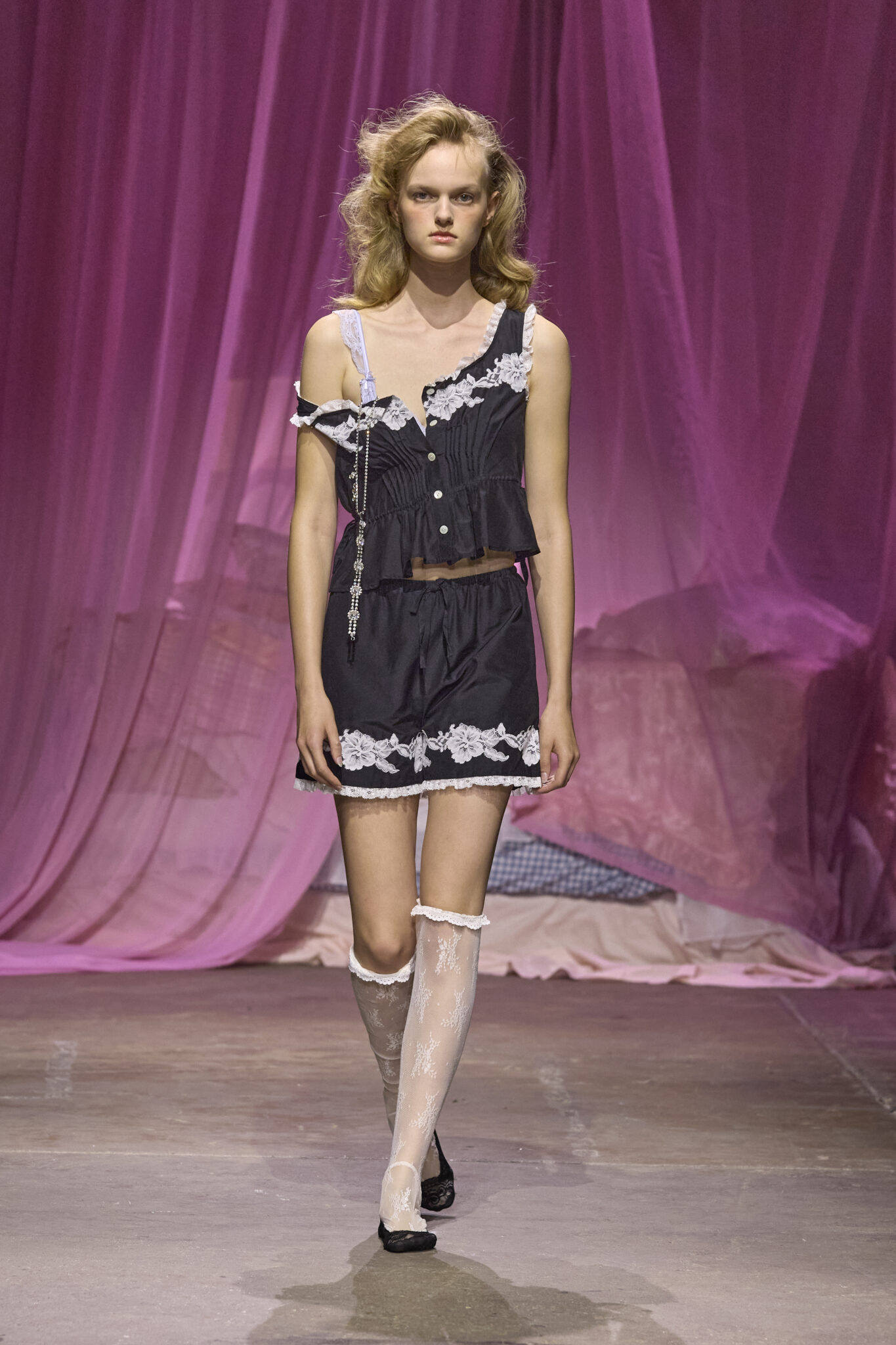
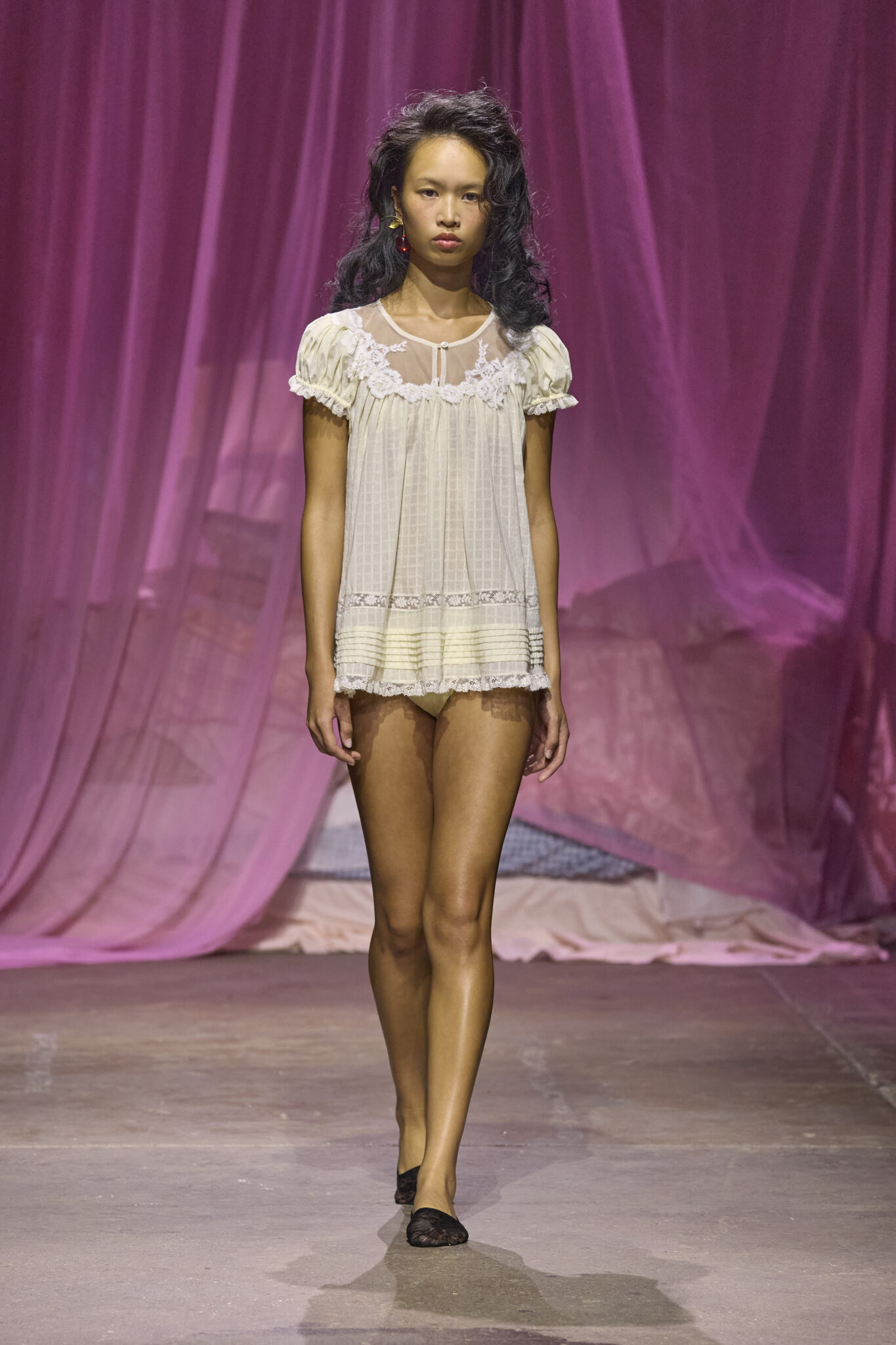
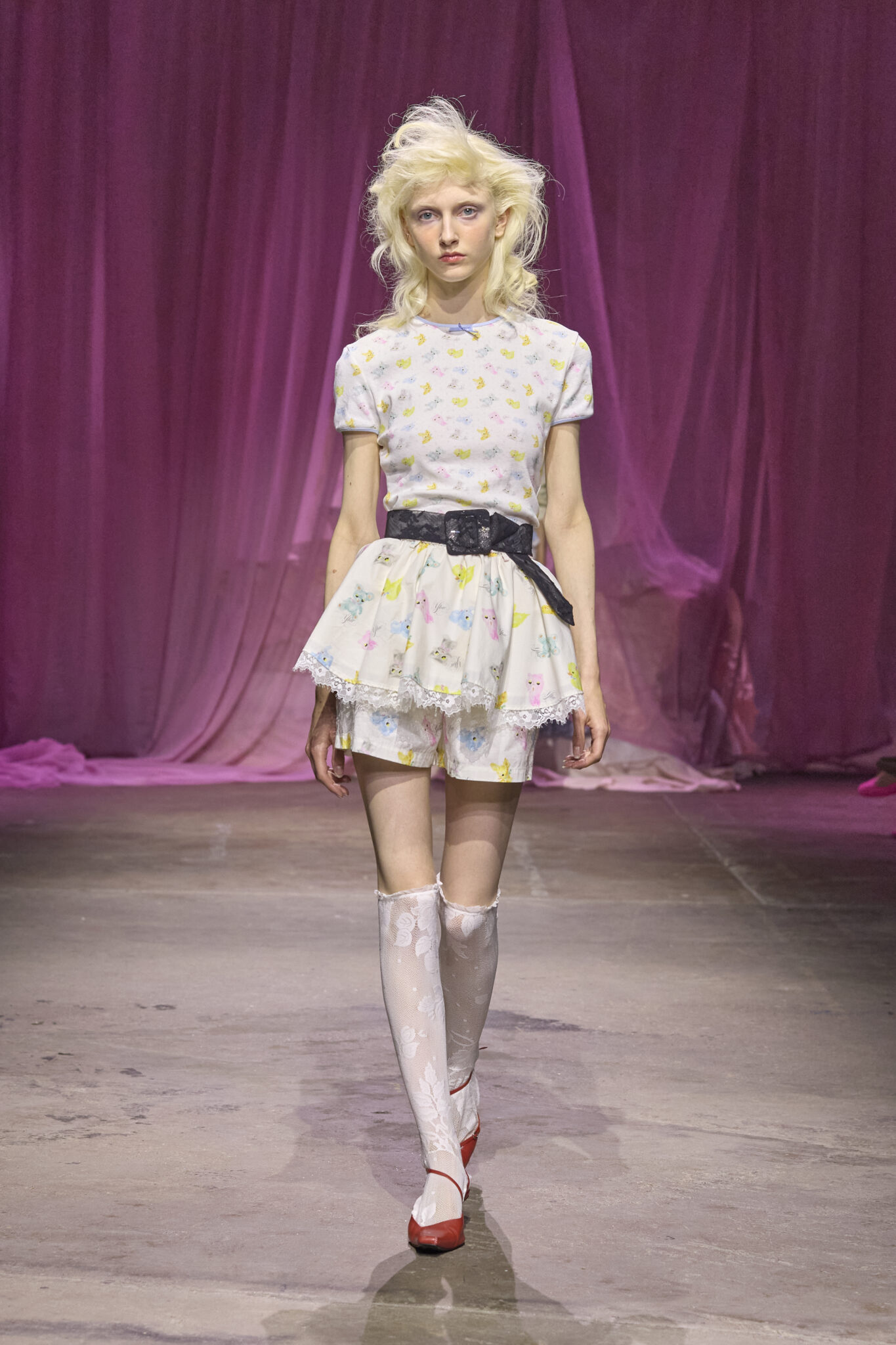
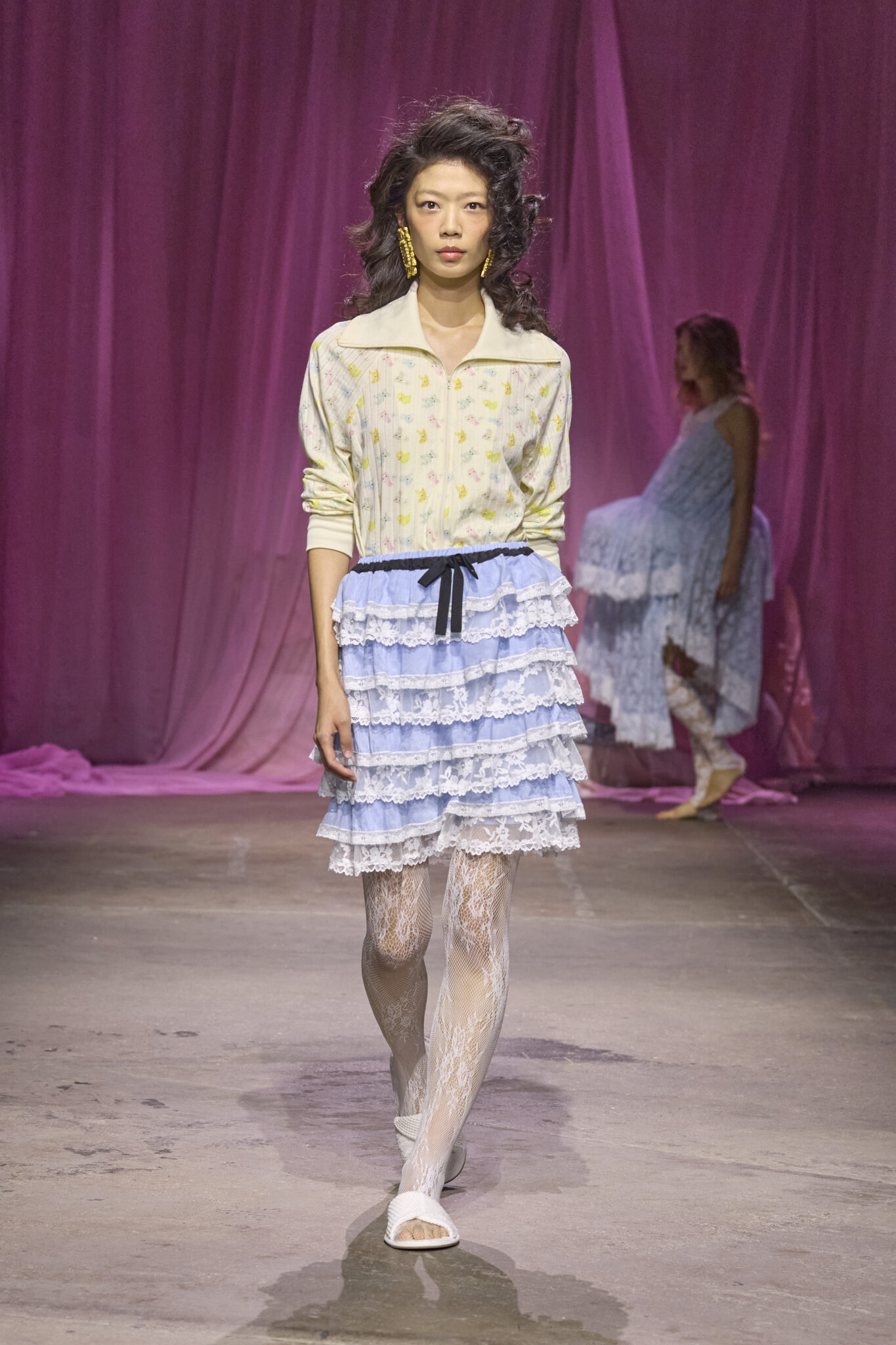
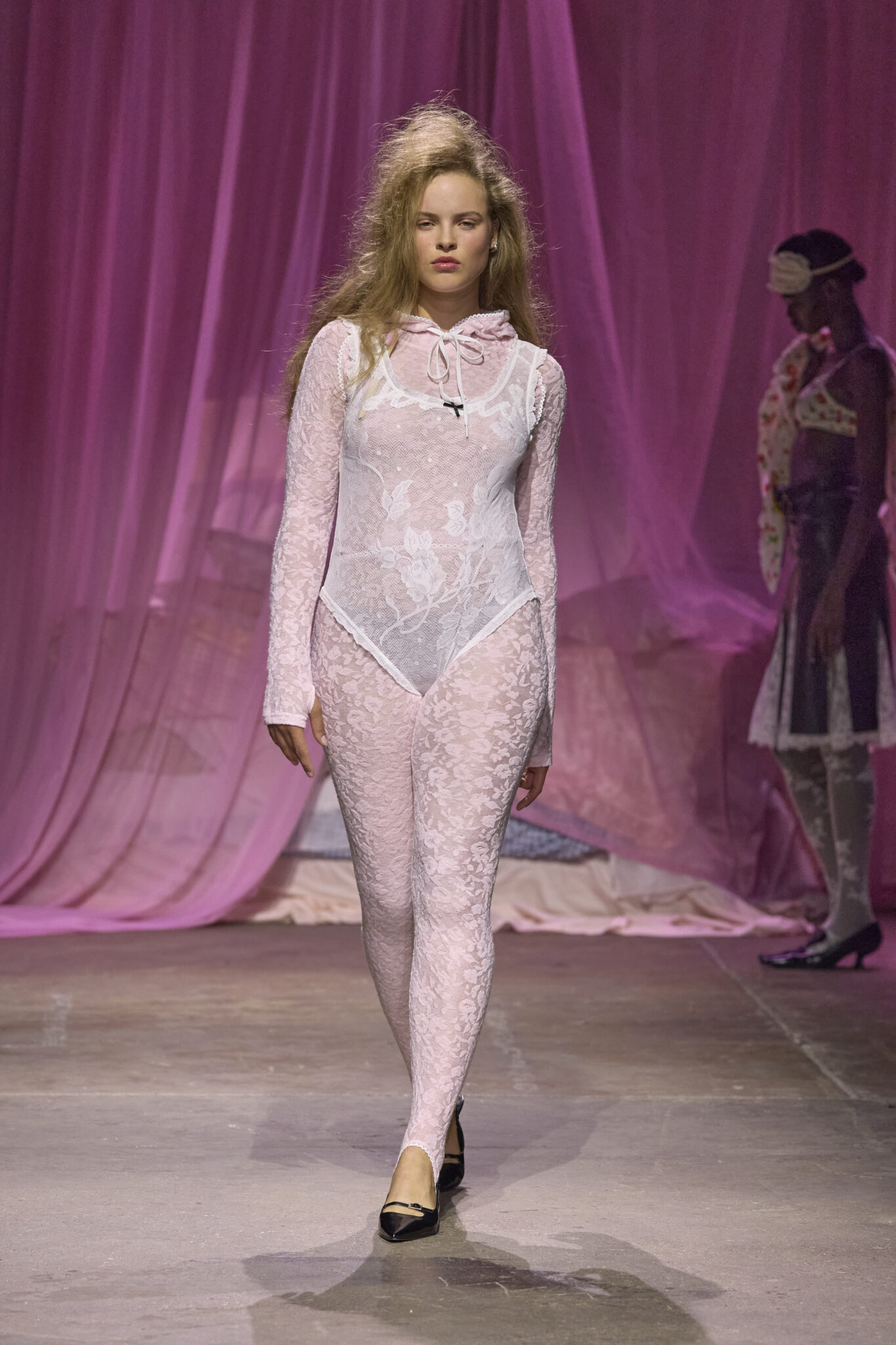
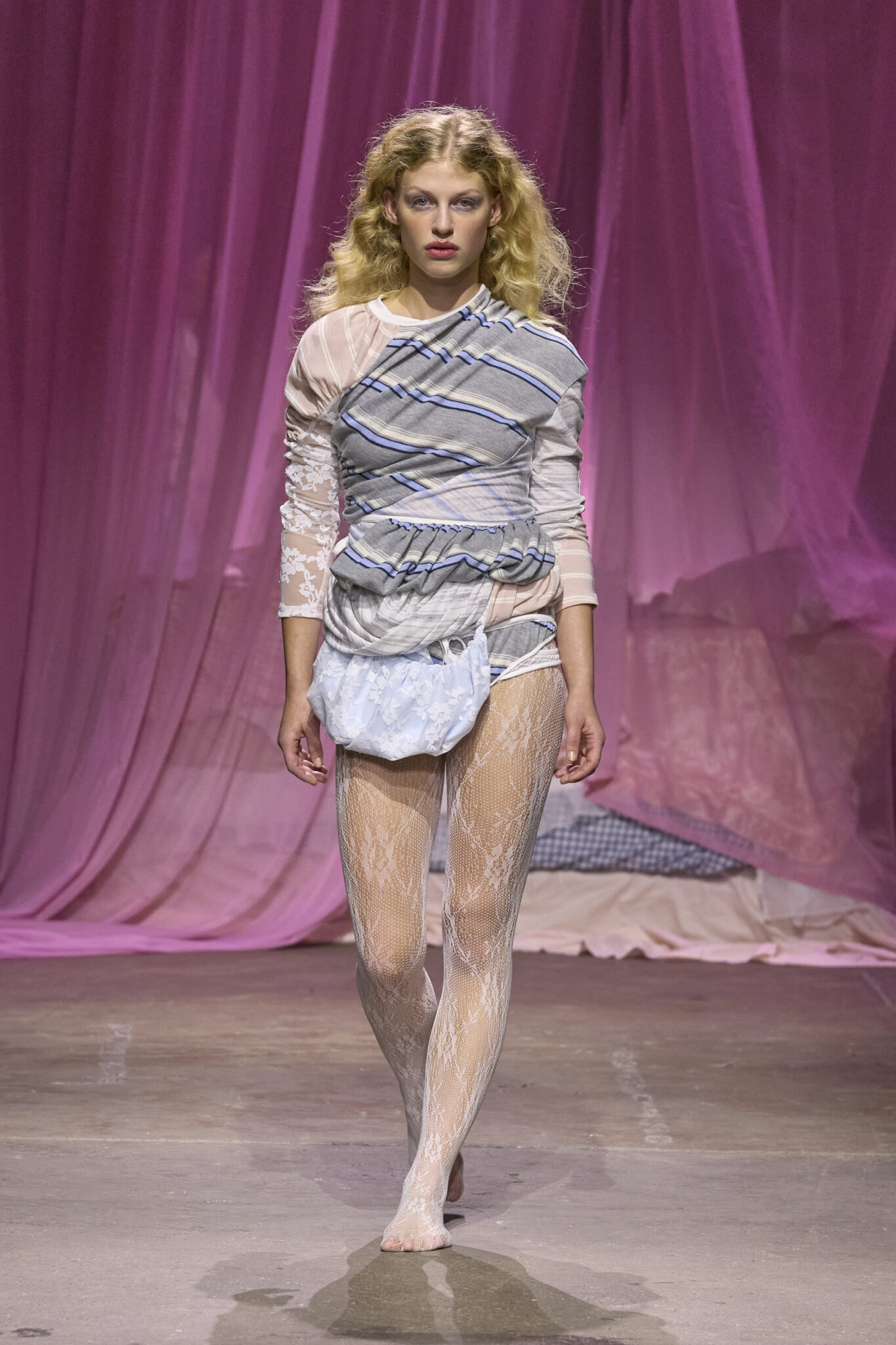
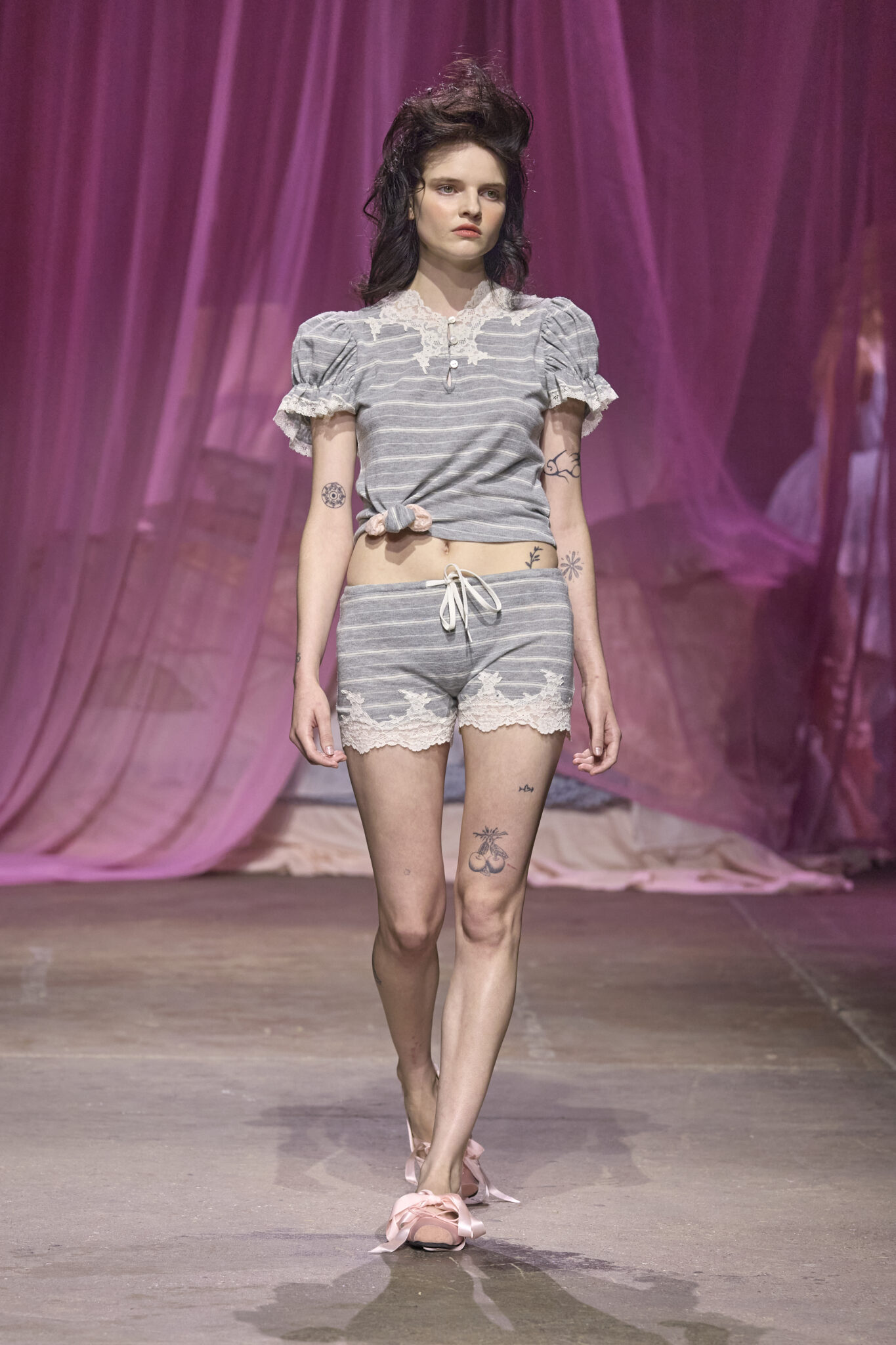
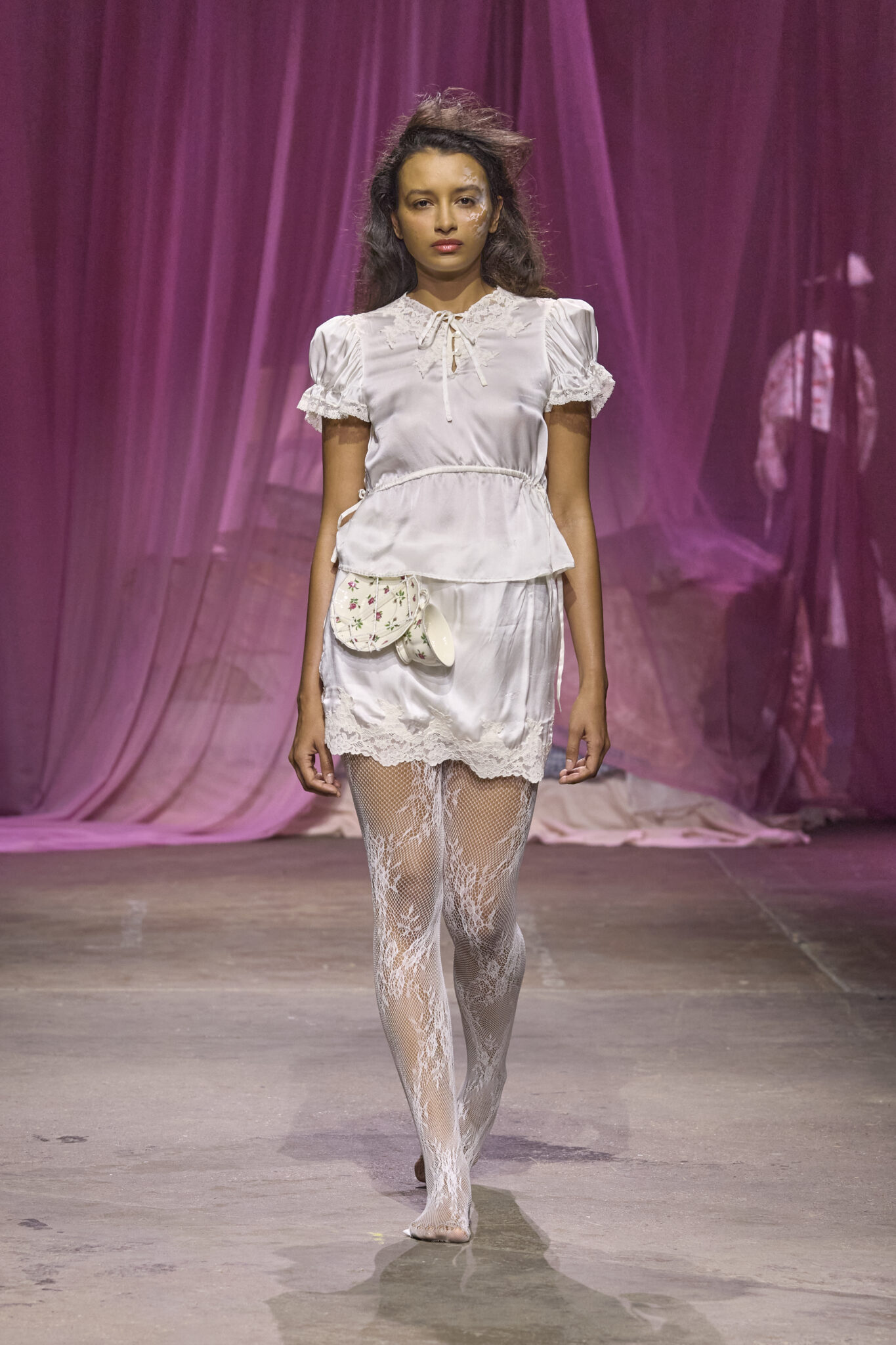
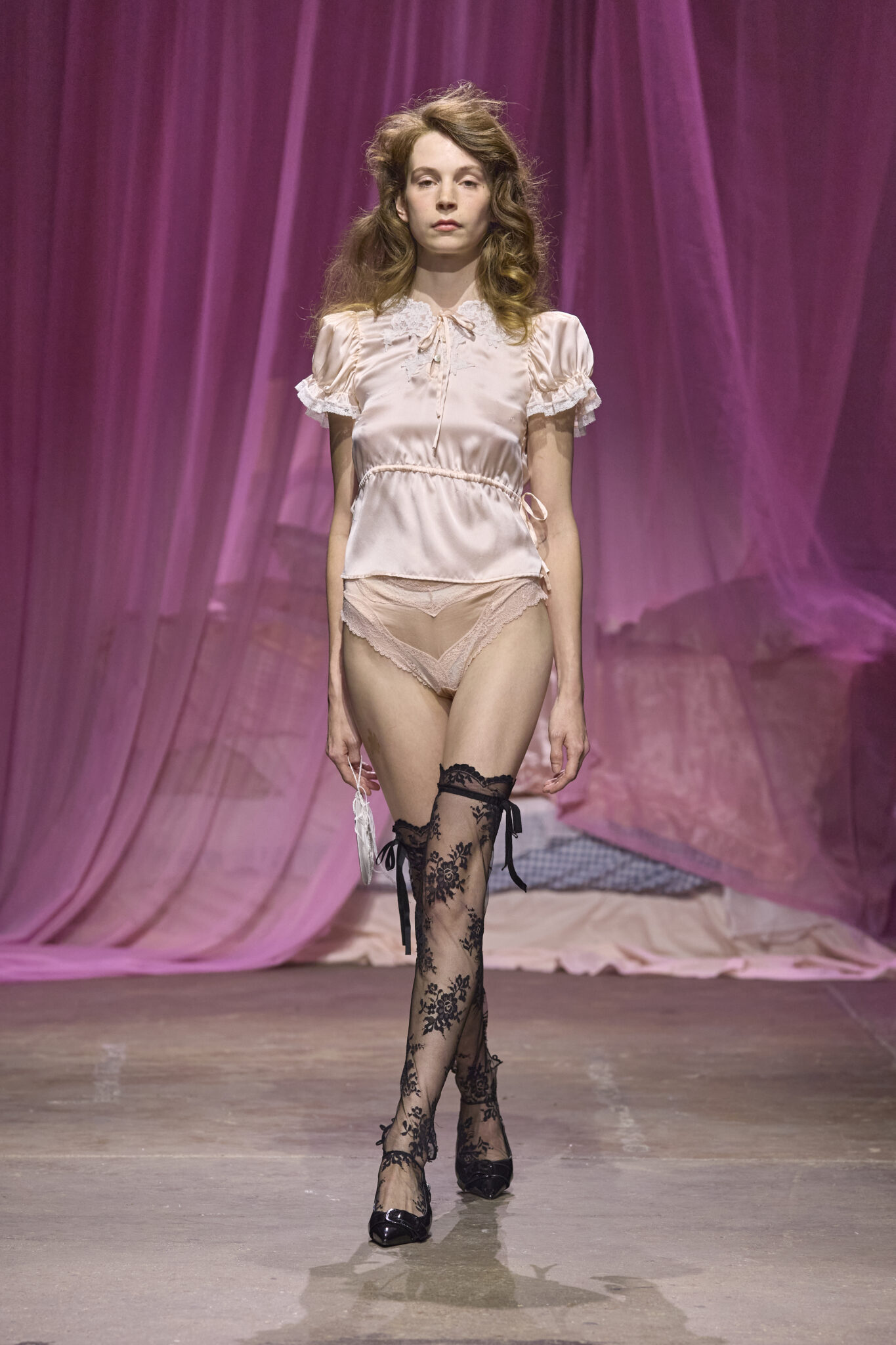
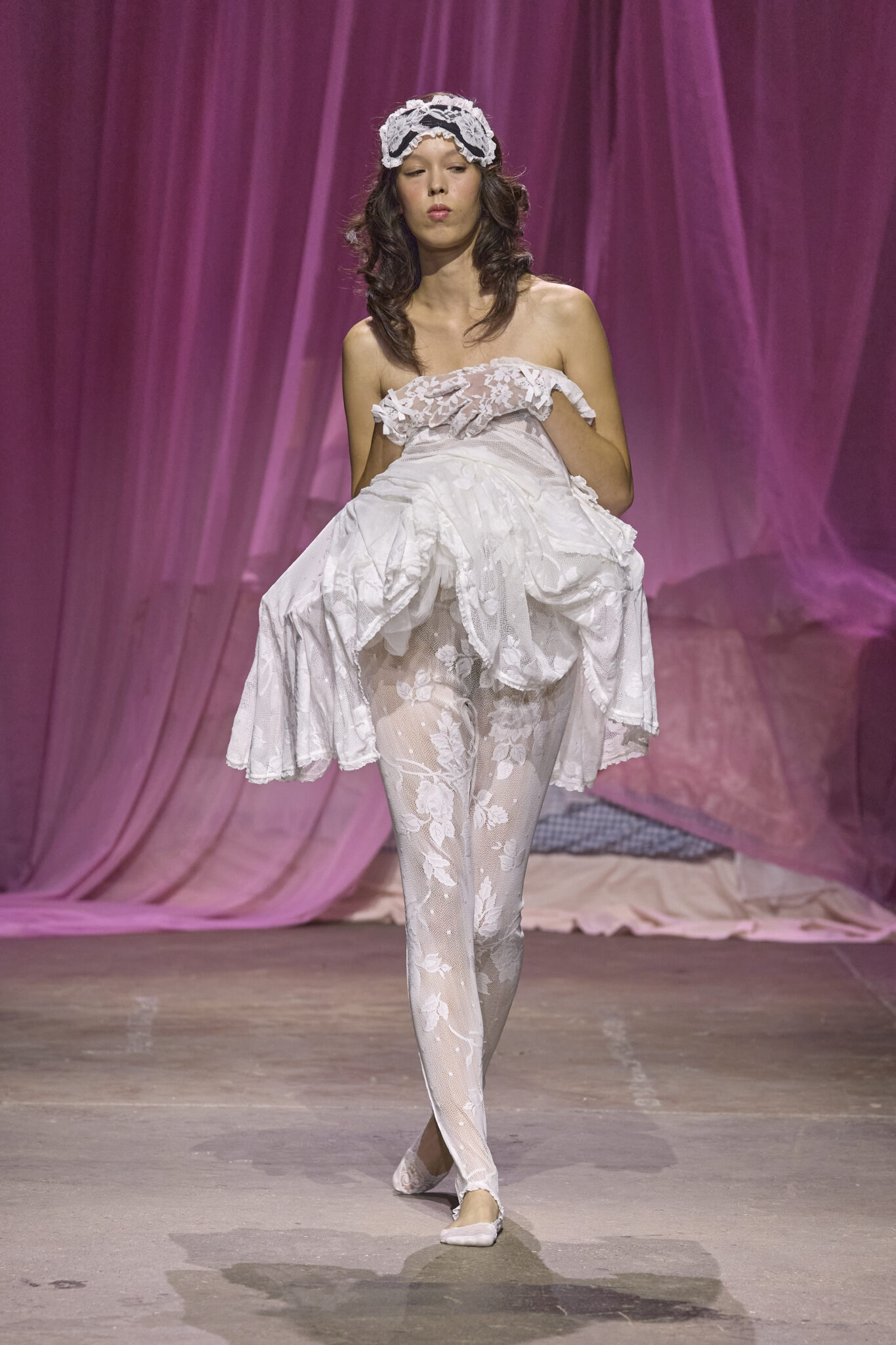
The clothes occupy a similarly uncertain state, caught somewhere between getting dressed and getting undressed. Yuhan Wang imagines the instinctive combinations that happen behind a closed bedroom door: lingerie left on beneath a striped polo, lace stockings worn with boxer shorts, something comfortable pulled over the remnants of what you wore outside. Silk satin and transparent lace meet the more ordinary textures of cotton, checks, and sports jersey, giving the collection the slightly accidental intimacy of dressing when nobody is watching.
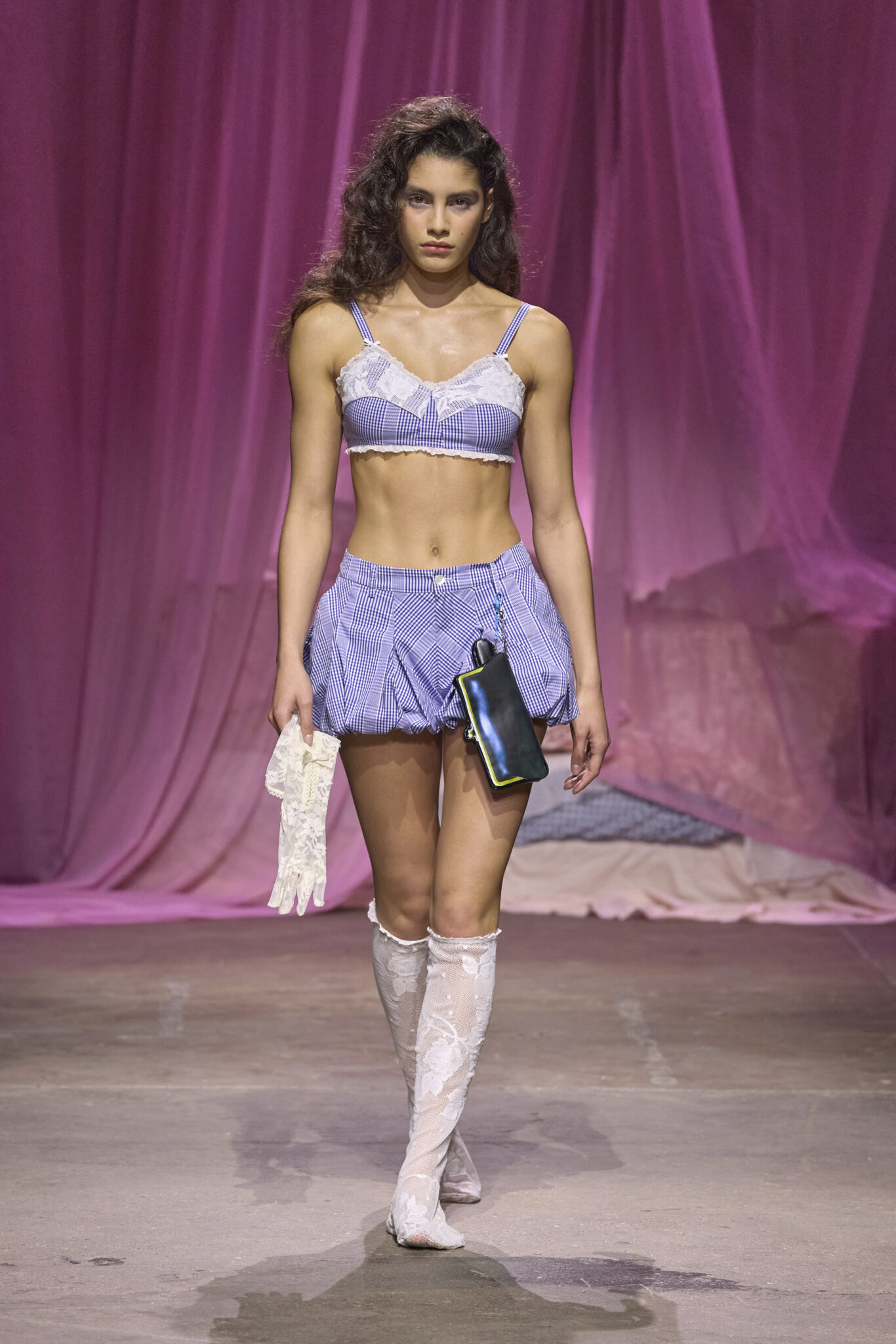
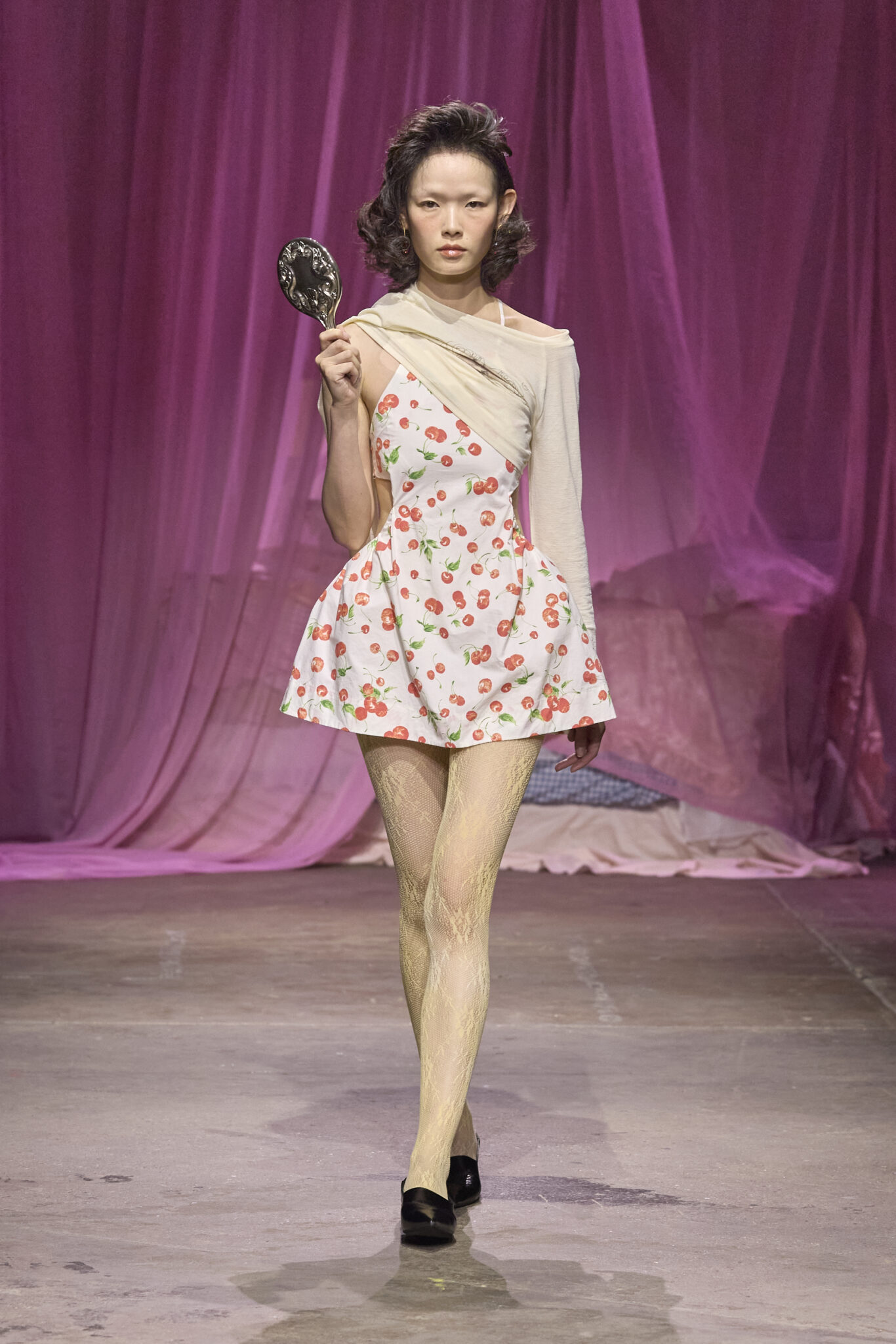
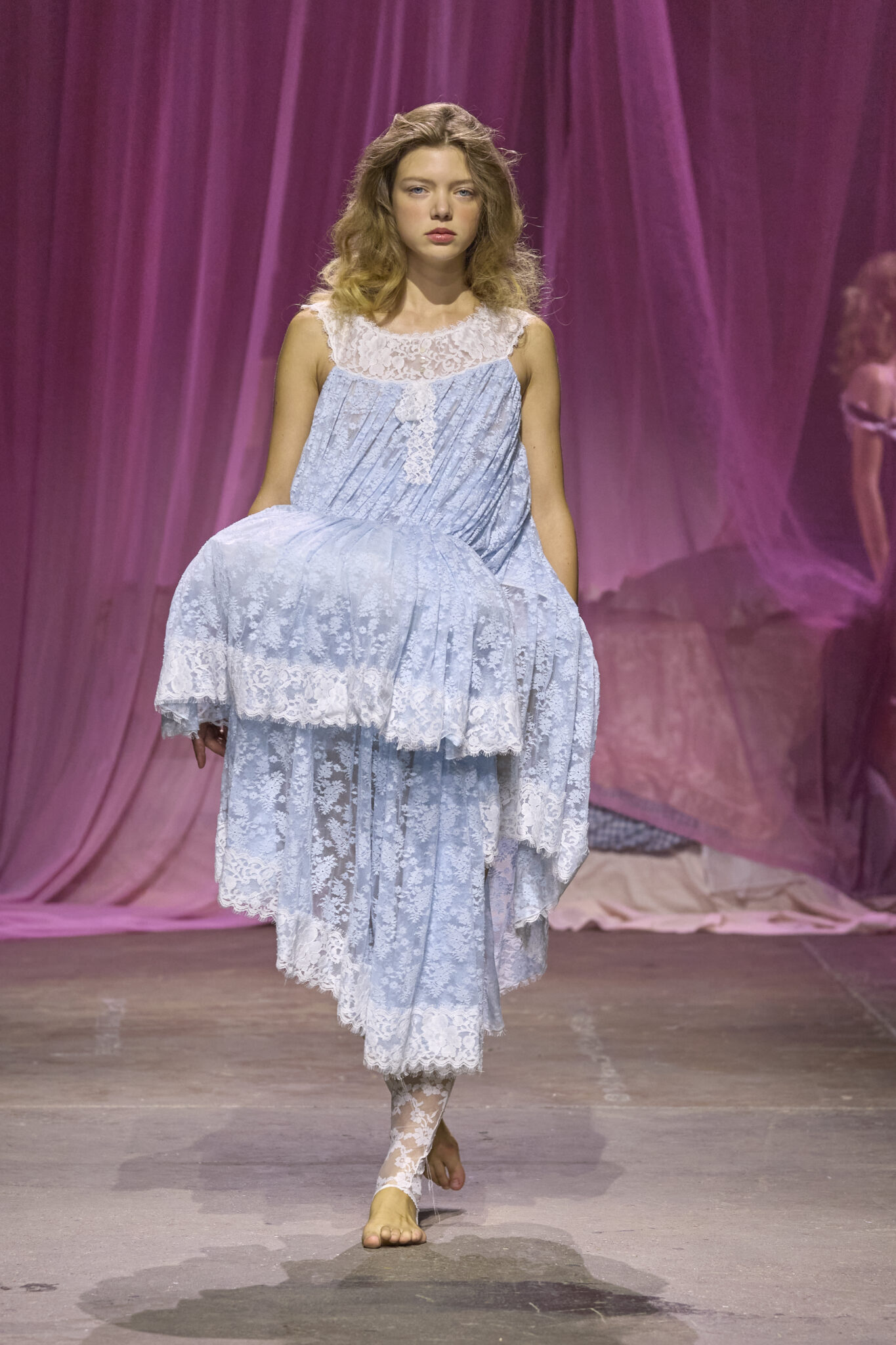
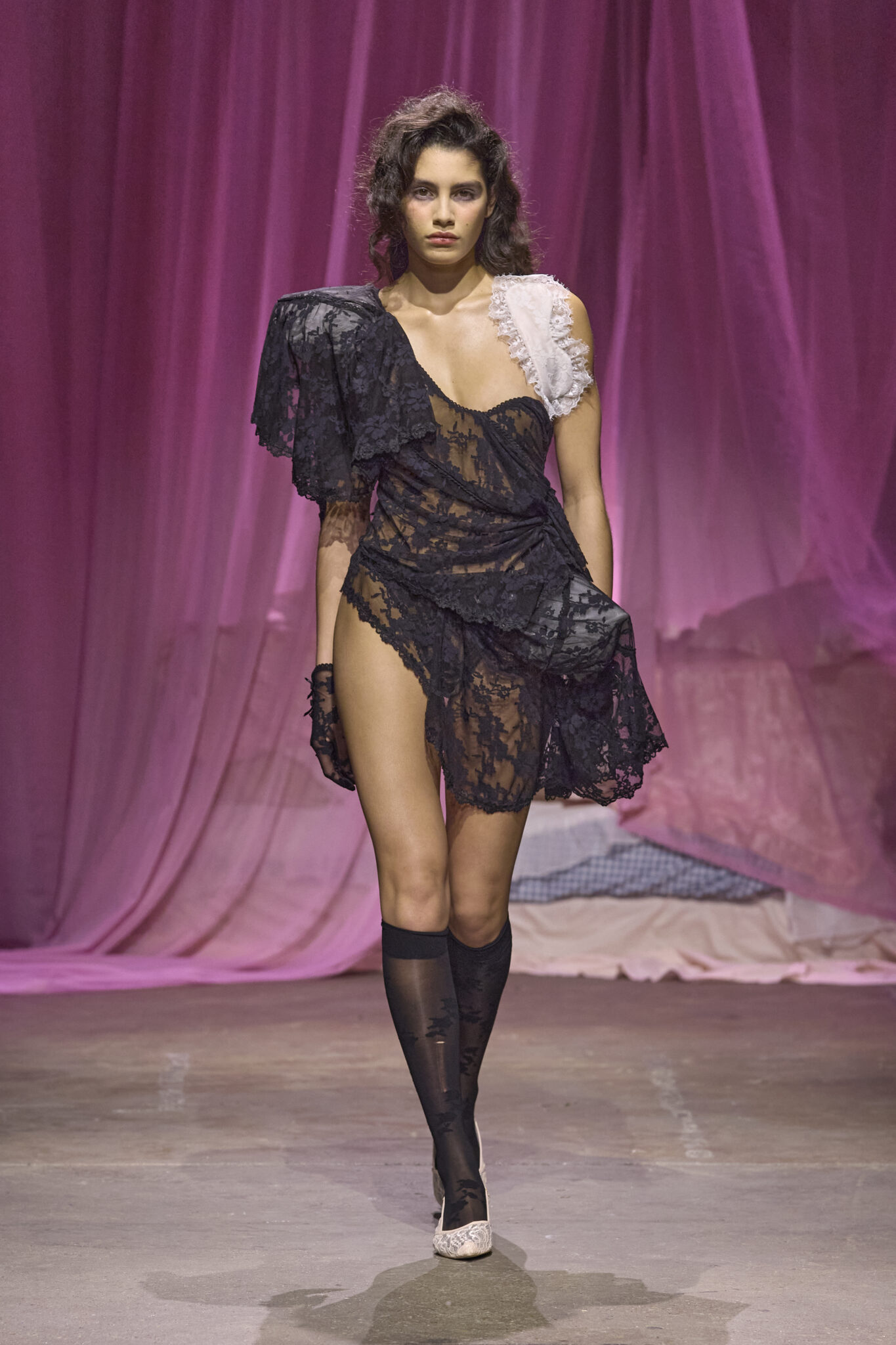
Familiar garments begin to behave strangely. A lingerie silhouette reappears in striped polo jersey, edged delicately in lace; elsewhere, three different briefs seem to have been pulled on at once, their layers of lace, check cotton, and jersey collapsing into a single garment. At the other extreme, a baby-doll dress swells outward through tulle and mesh, taking something girlish and familiar into more uncanny territory. Lace moves between these worlds, sometimes decorative, sometimes wrapping the body like a second skin.
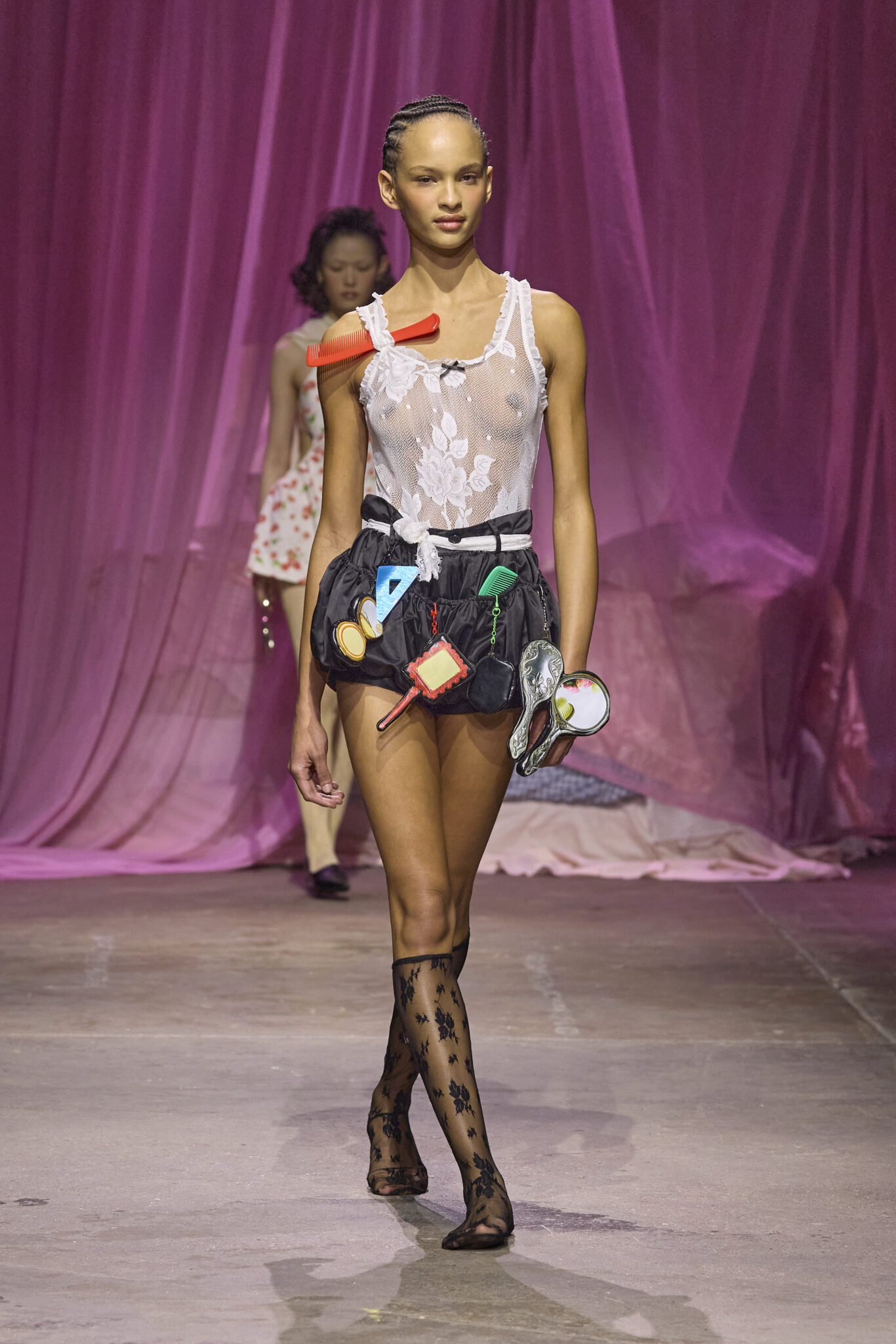
These private moments extend into the styling itself. A clothes brush used to sweep lint from a coat becomes part of the look. Necklaces appear caught against clothing, as though a girl has just come home and, while trying to take off her jewelry, has accidentally tangled it in what she is wearing. Tiny floral teacups and saucers circle the waist, suggesting a private tea time that might be taking place only inside a dream. These details capture gestures that would normally disappear unnoticed, small and intimate moments belonging to a woman alone with herself.
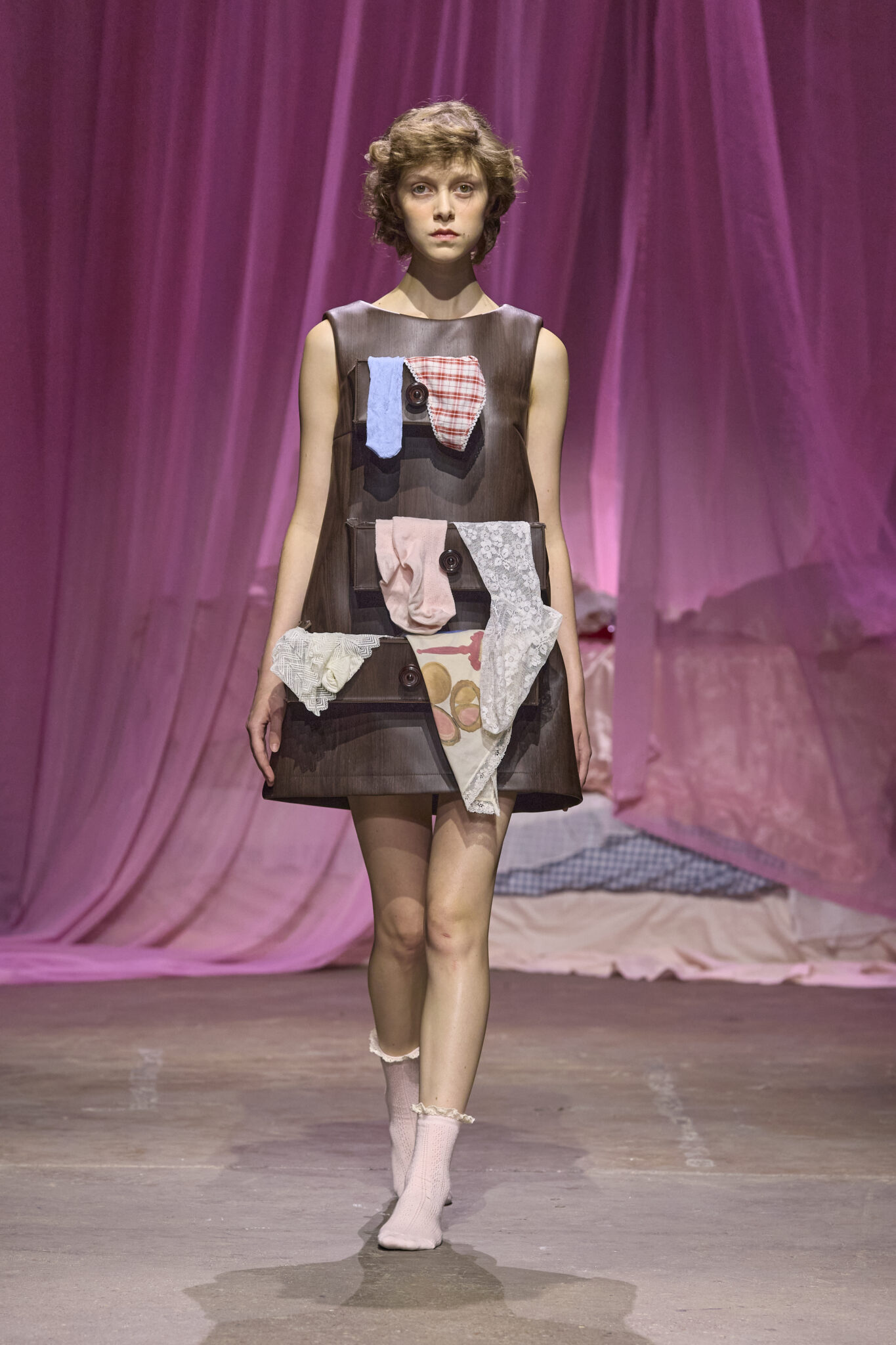
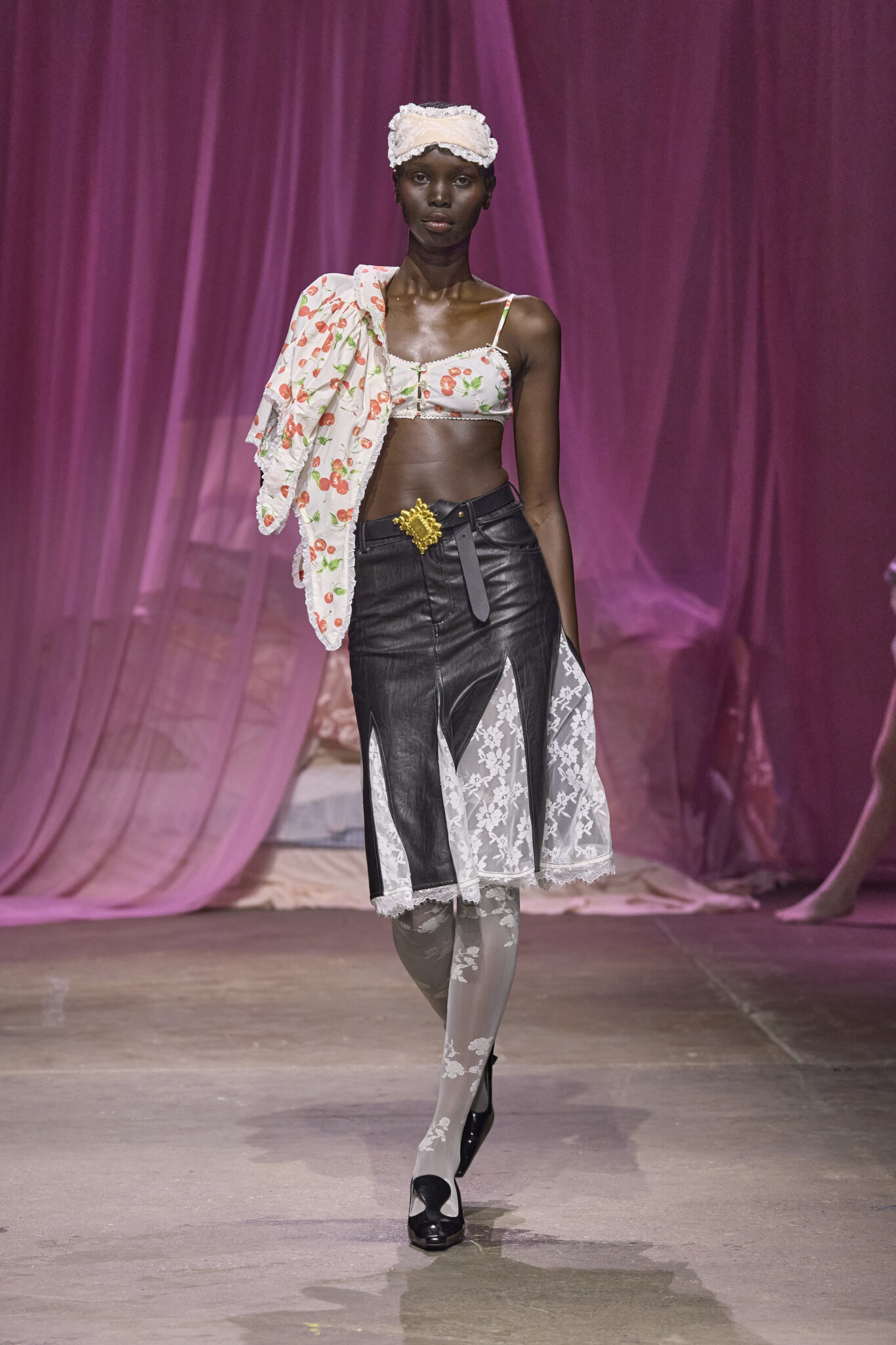
The contents of the bedroom are subject to the same transformations. Powder compacts, blush cases, miniature mirrors and brushes leave the dressing table to become bags, charms and accessories, while an empty vintage jewelry setting, stripped of its central stone, is reimagined as an earring and belt detail. The object remains recognizable, but something is missing, like a memory recalled from a dream without all of its details.
Elsewhere, sweetness acquires a sharper edge, as hand-drawn cherries and cats recur like fragments from a dream. What initially appears innocent or decorative begins to feel slightly displaced, carrying the same tension between sweetness and unease that runs throughout the collection.
The woman in Yuhan Wang’s bedroom might be asleep, getting ready to go out, just coming home, having tea by herself, or somewhere between all of these moments. The dream allows these private states to coexist, free from the need to settle into a single identity. With Sweet Nightmare, Yuhan Wang does not ask which version of the self is real. Instead, she allows them all into the room.
CREDITS
Casting Director: Nicola Kast
Stylist: Lara McGrath
Make-up: Bea Sweet
Hair: James Parr and Stacey Wright using Wahl
Production: Blonstein
PR: AB Communication
Press release: Alex Kessler